
Order Code
2025
Preferred Specimen
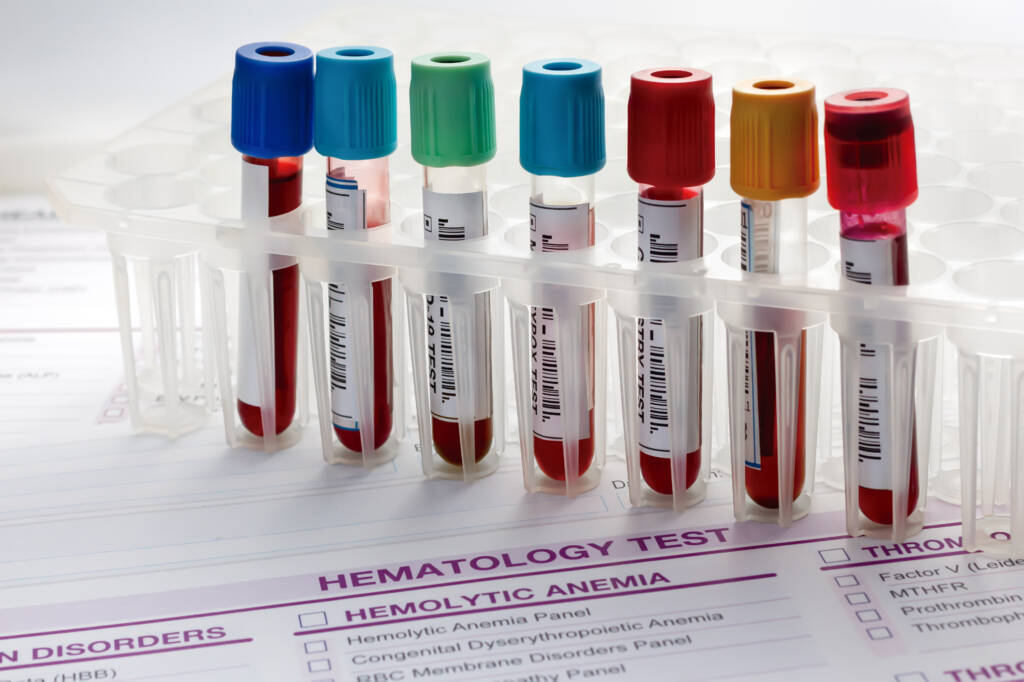
Collect 2 mL of serum using an SST tube. Allow the sample to clot in an upright position for at least 30 minutes, then centrifuge within 2 hours of collection. Refrigerate the specimen promptly.
ContainerType
Serum separator tube
Alternate Specimen Requirements
Collect 2 mL of serum in a plain red top tube. Allow the sample to clot upright for a minimum of 60 minutes, then centrifuge and transfer the serum to a plastic transport tube within 2 hours of collection. Clearly label the tube as serum from a plain red top tube. Refrigerate.
Alternatively, 2 mL of plasma collected in a heparin (green top) tube may be used. Centrifuge immediately and separate the plasma from the cells. Transfer plasma to a plastic transport tube and clearly label it as heparin plasma. Refrigerate.
Minimum Volume
Adult: 0.5 mL serum
Pediatric: 0.2 mL serum (does not allow for repeat or
additional testing).
Transport Temperature
Refrigerated
Expected Turnaround Time
1 day
Specimen Stability
7 days room temperature; 1 month refrigerated
Methodology
Roche COBAS enzymatic/colorimetric acc. Ifcc Note: STAT or regional laboratory testing may use different methodology and/or manufacturer
Rejection Criteria
- Gross hemolysis
Overview
Amylase is a key digestive enzyme predominantly produced by the pancreas and salivary glands. Its primary function is to break down carbohydrates into monosaccharides. Amylase exists in multiple isoforms, with the two most common being the pancreatic-derived ‘P-form’ and the salivary gland-derived ‘S-form.’ Elevated levels of amylase in blood and urine are frequently observed when there is inflammation or injury to either the pancreas or salivary glands. Minor amounts of amylase are also found in other tissues, including the fallopian tubes, testes, lungs, thyroid, tonsils, breast milk, sweat, tears, and certain cancers.
Pancreatitis is a prevalent condition, with over 210,000 hospital admissions annually in the U.S., marked by increased serum levels of amylase and lipase due to pancreatic inflammation. In acute pancreatitis, both enzymes typically rise to at least three times the upper limit of normal, regardless of cause—such as alcohol use, gallstone obstruction, or drug reactions. Amylase levels tend to increase slightly earlier than lipase and return to normal more quickly. Urinary amylase levels also rise, reflecting renal excretion of the enzyme.
Clinical Significance
- Evaluation of symptoms consistent with a pancreatic disorder (abdominal pain, fever, loss of appetite, nausea, vomiting, etc)
- Elevation ≥3x times the upper limit of normal (amylase or lipase) is consistent with the diagnosis of acute pancreatitis.
- Elevation typically occurs within 24 hours of symptom onset and resolves over 3-4 days.
- Elevation several weeks post acute pancreatitis may indicate persistent inflammation, blockage of the pancreatic duct, or development of a pseudocyst.
- Assess effectiveness of treatment for pancreatitis and other pancreatic diseases (although following symptomatic improvement is often sufficient)
- Evaluation of swelling and inflammation of the salivary glands
- Part of the trauma evaluation for blunt injury to the pancreas
- Evaluate possible postprocedure pancreatitis − presence of >3-4x serum amylase increase 4 hours postendoscopic retrograde cannulation of pancreatic duct (ERCP) is indicative of complication (seen in approximately 2% to 11% of cases).
Additional Information
Elevations in amylase can also occur in conditions other than acute pancreatitis, including chronic pancreatitis, pancreatic pseudocysts, pancreatic ascites, abscesses, neoplasms near the pancreas, pancreatic trauma, and common bile duct stones.
Mild increases in amylase are nonspecific and may be seen in various intra-abdominal disorders like peptic ulcers or bowel infarction.
The urinary trypsinogen-2 test strip has been proposed as a useful early diagnostic tool for acute pancreatitis and post-ERCP pancreatitis, although study results remain inconclusive (Sankaralingham, 2007; Anderson, 2010).
Interpretative Information
Amylase may be elevated due to:
- Inflammation of the pancreas
- In Western countries, 80% of acute pancreatitis is caused by gallstones (transient obstruction of the ampulla of Vater) and alcohol. (Banks, 2006)
- Drugs known to cause inflammation include aspirin, azathioprine, chlorthalidone, cimetidine, clozapine, corticosteroids, dideoxyinosine, fluvastatin, isoniazid, loop and thiazide diuretics, mirtazapine, NSAIDs, oral contraceptives, sulfamethoxazole, and exenatide.
- Nondrug causes include hypertriglyceridemia (>1000 mg/dL), hypercalcemia, trauma, pancreatic tumors, virus (ie, paramyxovirus, Epstein-Barr virus, cytomegalovirus), and idiopathic.
- Inflammation of the salivary glands (eg, mumps)
- Intra-abdominal disorders
- Damage to the intestines (eg, bowel infarction)
- Viscous perforation into the pancreas (eg, penetrating gastric ulcer)
- Gynecologic and obstetric causes (eg, ruptured ectopic pregnancy, tubo-ovarian abscess)
- Cystic fibrosis
- Diabetic ketoacidosis
- Macroamylasemia
- Present in 2% to 5% of cases of elevated amylase
- Benign condition where normal amylase is bound to large proteins (eg, immunoglobulins) which results in a longer half-life as well as decreased renal clearance
- Discern by measuring urine amylase − because the large macroamylase molecules are slowly filtered from the kidneys, urine levels will be low with macroamylase and high with acute pancreatitis.
- Also, ultracentrifugation techniques are available − serum or plasma specimen is spun to separate out macroamylase and (supernatant) amylase is measured. If levels are low, macroamylasemia is indicated, if levels are high, hyperamylasemia may be indicated.
- Chronic renal insufficiency
- Blood amylase may increase up to 3x the upper limit of normal without diagnostic significance
- Ectopic production by certain malignancies (eg, lung, ovary, colon, breast malignancies; pheochromocytoma; thymoma; multiple myeloma)
- Certain drugs
- Opiates and cholinergics (sphincter of Oddi spasm)
- Phenylbutazone, potassium iodide, procyclidine (may cause parotitis)
- Liver disease
- Pre-eclampsia
Amylase may be artifactually low due to:
- Hypertriglyceridemia (significant as approximately 20% of patients with acute pancreatitis have abnormal lipids)
- Chronic or relapsing pancreatitis, where low or normal serum amylase may be the result of acinar cell injury and destruction due to prior pancreatitis episodes
Limitations
- Level of the blood amylase (or lipase) does not correlate with the severity of acute pancreatitis.
- Amylase levels may be normal in patients with recurrent pancreatitis due to acinar cell injury.
- As the biologic half-life of amylase is shorter than that of lipase, a delay in laboratory evaluation may lead to a normal amylase result with increased lipase.
References
Andersen AM, Novovic S, Ersbøll AK, et al, “Urinary Trypsinogen-2 Dipstick in Acute Pancreatitis,” Pancreas, 2010, 39(1):26-20.19752771
Balthazar EJ, “Acute Pancreatitis: Assessment of Severity With Clinical and CT Evaluation,” Radiology, 2002, 223(3):603-13. 12034923
Banks PA and Freeman ML, “Practice Guidelines in Acute Pancreatitis,” Am J Gastroenterol, 2006, 101(10):2379-400.17032204
McClatchey, KD, Amin HM, Curry JL “Diagnostic Enzymology and Other Biochemical Markers of Organ Damage,”Clinical Laboratory Medicine, 2002, 2nd ed, Lippincott, Williams, and Wilkins, editors, Philadelphia PA, 301.
Painter CY, Cope JY, and Smith JL, “Reference Information for the Clinical Laboratory,” Tietz Textbook of Clinical Chemistry, 3rd ed, Burtis VA and Ashwood ER, eds, Philadelphia, PA: WB Saunders Co, 1999, 1801.
Sankaralingam S, Wesen C, Barawi M, et al, “Use of the Urinary Trypsinogen-2 Dip Stick Test in Early Diagnosis of Pancreatitis After Endoscopic Retrograde Cholangiopancreatography,” Surg Endosc, 2007, 21(8):1312-15.17332967
Smotkin J and Tenner S, “Laboratory Diagnostic Tests in Acute Pancreatitis,” J Clin Gastroenterol, 2002, 34(4):459-62.11907364
Diagnostic Role
Pancreatitis
In acute pancreatitis, blood amylase typically increases ≥3x the upper limit of normal, and can be significantly higher. The onset of amylase increase occurs within 12-72 hours, returning to normal as inflammation subsides. An exception, however, may be seen in chronic pancreatitis where acinar cell injury may preclude an increase in amylase during a superimposed acute exacerbation. In patients presenting with biliary-type abdominal pain, a ≥3x increase in blood amylase levels that returns to normal within 48-72 hours suggests stone passage through the common bile duct as the cause of pancreatitis. Evaluation of the severity of pancreatitis due to any etiology can be calculated based on several scales [APACHE II, Ranson’s Criteria, CT Severity Index (Balthazar, 2002)], but the level of amylase elevation is not a factor in determining either disease severity or prognosis.
Parotitis
Parotitis may be caused by trauma, infection (bacterial or viral) sialolithiasis, radiation to the neck area with subsequent duct obstruction or chronic alcoholism (salivary amylase levels are 3x higher than normal in 10% of patients with alcoholism). Blood amylase is not usually performed in the clinical setting as the diagnosis is typically made by history and physical exam, with CT imaging indicated if an abscess is suspected.
Test Setup Days
Monday through Friday PM shift
CPT
82150 LOINC: 1798-8
Reference Range
28-100 U/L
| UNIT CODE | UNIT CODE NAME | ANALYTE | GENDER | AGE | REFERENCE RANGE | Units of Measure |
|---|---|---|---|---|---|---|
| 2025 | AMYLASE | AMYLASE | NOT SPECIFIED | ALL | 28-100 | U/L |
| 2025 | AMYLASE | AMYLASE | MALE | ALL | 28-100 | U/L |
| 2025 | AMYLASE | AMYLASE | FEMALE | ALL | 28-100 | U/L |