
Order Code
4004
Preferred Specimen
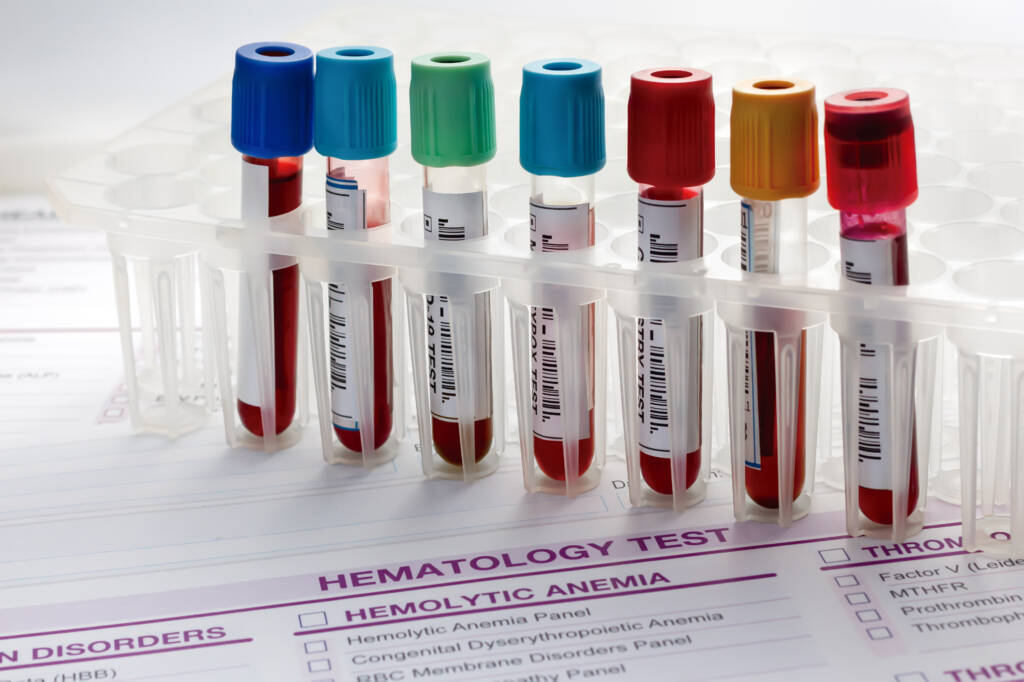
1 mL serum. Allow SST to clot in an upright position for at least 30 minutes, then centrifuge sample within 2 hours of collection. Refrigerate.
Container Type
Serum separator tube
Alternate Specimen Requirements
1 mL serum from a plain red top tube. Allow sample to clot in an upright position for at least 60 minutes, then centrifuge sample and transfer serum to a plastic transport tube within 2 hours of collection. Clearly label tube as serum from a plain red top tube. Refrigerate.
Minimum Volume
- 0.5 mL serum
Transport Temperature
Refrigerated
Expected Turnaround Time
1–3 days
Specimen Stability
4 days room temperature; 8 days refrigerated; 2 months frozen
Methodology
Immunoturbidimetric standardized to WHO-IRP reference standard IFCC SP1-01
Rejection Criteria:
- Thawed specimens
Overview
Apolipoprotein A (Apo A) is one of several apolipoproteins which structurally bind and help solubilize circulating lipoproteins. It also regulates and controls lipoprotein metabolism by serving as cofactors for enzymes and ligands for receptors (Mahley 1984; Rosenson 2019a). Apo A exists in multiple forms (Apo A-I, Apo A-II, Apo A-IV, Apo A-V), of which Apo A-I is the primary protein associated with HDL cholesterol and at present is the best understood.
Apo A-I is produced in the liver and intestines and makes up 65% to 70% of the protein mass in HDL. Apo A-I is a key mediator in cholesterol cellular homeostasis and transport in the blood through its function as a cofactor for lecithin-cholesterol acyltransferase (LCAT), an enzyme that facilitates cholesterol transfer via HDL lipoproteins to the liver for degradation (Elhomsy 2014). In particular, Apo A-I aids in the removal of cholesterol from white blood cells within artery walls, slowing their conversion into foam cells and preventing further progression of atherosclerosis (Mangaraj 2016).
The concentration of Apo A-I tends to rise and fall with HDL levels. High levels of Apo A-I are considered protective, while deficiencies in Apo A-I correlate with an increased risk of developing cardiovascular disease (CVD). Apo A-I levels are not recommended for routine CVD risk assessment in asymptomatic adults per the 2010 American College of Cardiology Foundation/American Heart Association guidelines, although a role exists in evaluating CVD risk when HDL levels are low (Elhomsy 2014; Greenland 2010).
Clinical Significance
- Not recommended for routine CVD risk assessment in asymptomatic adults (2010 American College of Cardiology Foundation/American Heart Association guidelines) (Greenland 2010).
- Strong personal or family history of abnormal lipid levels (e.g., low HDL levels), especially in the presence of premature CVD.
- Monitor effectiveness of intervention (dietary changes, exercise, medication).
- Diagnose rare inherited or acquired conditions that cause Apo A-I deficiencies, such as familial alpha-lipoprotein deficiency.
Additional Information
| Apolipoprotein A | Primary Source | Role |
|---|---|---|
| Apo A-I | Liver, Intestine | Structural protein for HDLActivates LCATFound in HDL, chylomicrons |
| Apo A-II | Liver | Structural protein for HDLActivates hepatic lipaseFound in HDL, chylomicrons |
| Apo A-IV | Intestine | Function unknownFound in HDL, chylomicrons |
| Apo A-V | Liver | Promotes LPL mediated TG lipolysisFound in HDL, chylomicrons, VLDL |
Adapted from Feingold 2018
Factors Affecting Apo A-I Levels
| Decrease Apo A-I | Increase Apo A-I |
|---|---|
| Obesity | Weight Loss |
| Diabetes Mellitus (poorly controlled) | Exercise |
| Chronic Kidney Disease | Pregnancy |
| Chronic Liver Disease | Certain drugs (e.g., statins, niacin, estrogens, carbamazepine, phenobarbital, ethanol) |
| Tobacco Use | Familial Hyperalphalipoproteinemia |
| Certain drugs (e.g., androgens, progestins, beta blockers, diuretics) | Familial cholesteryl ester transfer protein deficiency (CETP) |
| Familial Hypoalphalipoproteinemia | — |
Adapted from Elhomsy 2014
Interpretative Information
Refer to testing laboratory for lab-specific normal values and interpretation. Examples of ranges:
| Apolipoprotein A-I (mg/dL) | Female Adults | Male Adults | Children/Adolescents |
|---|---|---|---|
| Low Risk | >140 | >120 | >120 |
| Borderline/High Risk | 123–140 | 109–120 | — |
| High Risk | <123 | <109 | <115 |
Adapted from Elhomsy 2014; Mayo 2018
Limitations
Apo A-I measurement alone has not been shown of benefit over current recommended cholesterol parameters (Harada 2014).
References
APOA1 apolipoprotein A1 [Homo sapiens (human)]. Gene [database online]. US National Library of Medicine. Bethesda (MD): The Library. https://ghr.nlm.nih.gov/gene/APOE#conditions. Updated June 17, 2019. Accessed June 18, 2019.
Elhomsy G. Apolipoprotein A-I. Medscape website. https://emedicine.medscape.com/. Updated November 21, 2014. Accessed May 16, 2019.
Expert Panel on Detection, Evaluation, and Treatment of High Blood Cholesterol in Adults. Executive Summary of The Third Report of The National Cholesterol Education Program (NCEP) Expert Panel on Detection, Evaluation, And Treatment of High Blood Cholesterol In Adults (Adult Treatment Panel III). JAMA. 2001;285(19):2486–2497. PMID: 11368702.
Expert Panel on Integrated Guidelines for Cardiovascular Health and Risk Reduction in Children and Adolescents; National Heart, Lung, and Blood Institute. Pediatrics. 2011;128 Suppl 5:S213–56. PMID: 22084329.
Feingold KR, Grunfield C. Introduction to Lipids and Lipoproteins. In: De Groot LJ, Chrousos G, Dungan K, et al, eds. Endotext [Internet]. South Dartmouth, MA: MDText.com, Inc.; 2000–2019. Updated February 2, 2018. Accessed May 16, 2019.
Framingham Heart Study. http://www.framinghamheartstudy.org. Accessed March 6, 2019.
Goff DC Jr, Lloyd-Jones DM, Bennett G, et al. 2013 ACC/AHA guideline on the assessment of cardiovascular risk. J Am Coll Cardiol. 2014;63(25 Pt B):2935–2959. PMID: 24239921.
Greenland P, Alpert JS, Beller GA, et al. 2010 ACCF/AHA guideline for assessment of cardiovascular risk in asymptomatic adults. Circulation. 2010;122(25):2748–2764. PMID: 21098427.
Grundy SM, Stone NJ, Bailey AL, et al. 2018 AHA/ACC/AACVPR/AAPA/ABC/ACPM/ADA/AGS/APhA/ASPC/NLA/PCNA Guideline on the Management of Blood Cholesterol. Circulation. 2018. PMID: 30565953.
Harada PH, Akinkuolie AO, Mora S; American College of Cardiology. Advanced Lipoprotein Testing: Strengths and Limitations.https://www.acc.org/. Published August 20, 2014. Accessed June 4, 2019.
Jellinger PS, Handelsman Y, Rosenblit PD, et al. Endocr Pract. 2017;23(Suppl 2):1–87. PMID: 28437620.
Mahley RW, Innerarity TL, Rall SC Jr, Weisgraber KH. J Lipid Res. 1984;25(12):1277–1294. PMID: 6099394.
Mangaraj M, Nanda R, Panda S. Indian J Clin Biochem. 2016;31(3):253–259. PMID: 27382195.
Mayo Clinic Laboratories. Lipids and Lipoproteins in Blood Plasma (Serum). Mayo website. 2018.
Nayor M, Vasan RS. Circulation. 2016;133(18):1795–1806. PMID: 27143546.
Olson RE. J Nutr. 1998;128(2 Suppl):439S–443S. PMID: 9478044.
Rollins G. Clinical Laboratory News.https://www.aacc.org/publications/cln/articles/2012/march/lipid-screening-children. Accessed February 21, 2019.
Rosenson RS. UpToDate. http://www.uptodate.com. Accessed May 2019(a,b).
Stone NJ, Robinson JG, Lichtenstein AH, et al. J Am Coll Cardiol. 2014;63(25 Pt B):2889–2934. PMID: 24239923.
Wu NQ, Li JJ. Chronic Dis Transl Med. 2016;2(1):3–6. PMID: 29063017.
Yang EH. Medscape website. Updated November 30, 2018. Accessed February 14, 2019.
Zioncheck TF, Powell LM, Rice GC, Eaton DL, Lawn RM. J Clin Invest. 1991;87(3):767–771. PMID: 1825665.
Diagnostic Role
Apolipoprotein A-I levels are not recommended for routine screening in patients of average risk for cardiovascular disease (CVD). Apo A-I levels may be appropriate, however, in the presence of a strong personal or family history of abnormal lipid levels, in particular low HDL levels, and/or premature CVD. Following intervention (dietary changes, exercise, medication), Apo A-I levels may be ordered to monitor effectiveness.
Alias
A-1 apolipoprotein
Test Setup Days
Monday through Friday PM shift
CPT
82172 LOINC: 1869-7
Reference Range
MALE:
AGE: 0-17 YEARS: >120 MG/DL
>=18 YEARS: 104-202 MG/DL
FEMALE:
AGE: 0-17 YEARS: >120 MG/DL
>=18 YEARS: 108-225 MG/DL
| UNIT CODE | UNIT CODE NAME | ANALYTE | GENDER | AGE | REFERENCE RANGE | UNITS OF MEASURE |
|---|---|---|---|---|---|---|
| 4004 | APOLIPO A-1 | APOA | NOT SPECIFIED | 0Y | 104-225 | MG/DL |
| 4004 | APOLIPO A-1 | APOA | NOT SPECIFIED | 17Y | >120 | MG/DL |
| 4004 | APOLIPO A-1 | APOA | NOT SPECIFIED | 150Y | 104-225 | MG/DL |
| 4004 | APOLIPO A-1 | APOA | MALE | 0Y | 104-202 | MG/DL |
| 4004 | APOLIPO A-1 | APOA | MALE | 17Y | >120 | MG/DL |
| 4004 | APOLIPO A-1 | APOA | MALE | 150Y | 104-202 | MG/DL |
| 4004 | APOLIPO A-1 | APOA | FEMALE | 0Y | 108-225 | MG/DL |
| 4004 | APOLIPO A-1 | APOA | FEMALE | 17Y | >120 | MG/DL |
| 4004 | APOLIPO A-1 | APOA | FEMALE | 150Y | 108-225 | MG/DL |