
Order Code
2036
Preferred Specimen
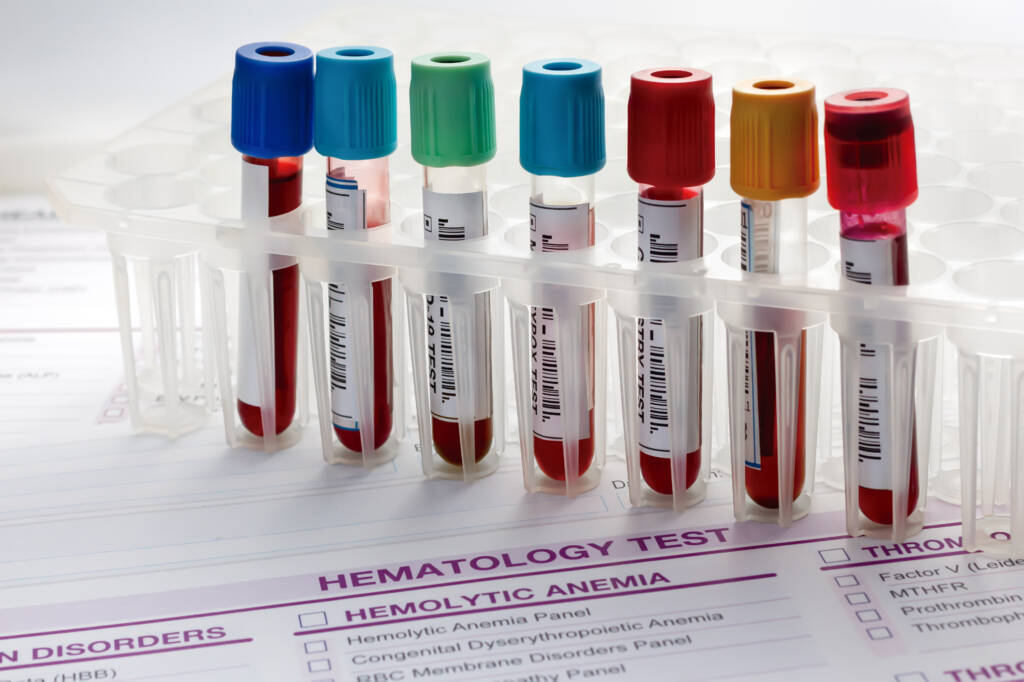
Collect 2 mL of serum. Allow the SST tube to clot upright for at least 30 minutes, then centrifuge within 2 hours of collection. Protect the sample from light and keep it refrigerated.
Container Type
Serum separator tube
Alternate Specimen Requirements
If using a plain red top tube, collect 2 mL of serum, allow it to clot in an upright position for at least 60 minutes, then centrifuge and transfer the serum to a plastic transport tube within 2 hours. Clearly label the tube as “serum from plain red top tube.” Keep protected from light and refrigerated.
Minimum Volume
- Adult: 0.5 mL serum
- Pediatric: 0.2 mL serum (Note: insufficient for repeat or additional testing.)
Transport Temperature
Refrigerated
Expected Turnaround Time
1 day
Specimen Stability
- Room temperature: 2 days
- Refrigerated: 1 week
- Frozen: 6 months
(Keep protected from light.)
Methodology
Roche COBAS colorimetric diazo; Doumas traceable
Rejection Criteria:
- Moderate or greater hemolysis
Overview
Bilirubin is a byproduct formed from the breakdown of red blood cells. It attaches to albumin in the bloodstream and travels to the liver, where it is converted into water-soluble forms—monoglucuronide and diglucuronide. Once processed, bilirubin is excreted into bile and removed from the body.
When bilirubin levels rise, it can lead to a yellow discoloration of the skin and eyes known as jaundice. Interpreting an elevated bilirubin result requires looking at related lab tests and dividing it into direct and indirect components.
- Total bilirubin is the combined amount of both fractions.
- Direct bilirubin represents the conjugated (water-soluble) form.
- Indirect bilirubin is calculated as:
- Total – Direct = Indirect bilirubin
Measuring total, conjugated, and unconjugated bilirubin helps identify the underlying cause of abnormal bilirubin levels.
Clinical Significance
Testing bilirubin levels assists in evaluating increased total bilirubin and determining the reason for jaundice.
Elevated direct (conjugated) bilirubin levels are often linked to:
- Blocked bile flow into the intestines due to biliary obstruction, inflammation, gallstones, infection, tumors, or pancreatitis
- Reduced secretion of conjugated bilirubin into bile, which can occur in hepatitis, Dubin-Johnson syndrome, or Rotor syndrome
References
Feldman M, Friedman LS, Brandt LJ, eds. Sleisenger and Fordtran’s Gastrointestinal and Liver Disease: Pathophysiology, Diagnosis, Management. 9th ed. Philadelphia, PA: Saunders/Elsevier; 2010.
Gourley GR. “Bilirubin Metabolism and Kernicterus.” Adv Pediatr. 1997;44:173–229. PMID: 9265971
Hammermann C, Goldstein R, Kaplan M, et al. “Bilirubin in the Premature: Toxic Waste or Natural Defense?” Clin Chem. 1998;44(12):2551–3. PMID: 9836729
Iyanagi T, Emi Y, Ikushiro S. “Biochemical and Molecular Aspects of Genetic Disorders of Bilirubin Metabolism.” Biochim Biophys Acta. 1998;1407(3):173–84. PMID: 9748558
Jonas MM, Graeme-Cook FM. “A 17-Year-Old Girl With Marked Jaundice and Weight Loss.” N Engl J Med. 2001;344(8):591–9. PMID: 11207356
Kamath PS. “Clinical Approach to the Patient With Abnormal Liver Test Results.” Mayo Clin Proc. 1996;71:1089–95. PMID: 8917295
Klein CJ, Revenis M, Kusenda C, et al. “Parenteral Nutrition-Associated Conjugated Hyperbilirubinemia in Hospitalized Infants.” J Am Diet Assoc. 2010;110(11):1684–1695. PMID: 21034882
Kurzweil SM, Shapiro MJ, Andrus CH, et al. “Hyperbilirubinemia Without Common Bile Duct Abnormalities and Hyperamylasemia Without Pancreatitis in Patients With Gallbladder Disease.” Arch Surg. 1994;129(8):829–33. PMID: 7519418
Lee WM. “Acute Liver Failure.” N Engl J Med. 1993;329(25):1862–72. PMID: 8305063
McPherson RA, Pincus MR, eds. Henry’s Clinical Diagnosis and Management by Laboratory Methods. 22nd ed. Philadelphia, PA: Elsevier Saunders; 2011.
Ohkubo H, Okuda K. “The Nicotinic Acid Test in Constitutional Conjugated Hyperbilirubinemia and Effects of Corticosteroids.” Hepatology. 1984;4(6):1206–8. PMID: 6500512
Porter M, Dennis B. “Hyperbilirubinemia in the Term Newborn.” Am Fam Physician. 2002;65(4):599–606. PMID: 11871676
Roy-Chowdhury H, Roy-Chowdhury J. Bilirubin Metabolism. UpToDate®, Waltham, MA: 2013. Available at: www.uptodate.com (Accessed November 4, 2013).
Westwood A. “The Analysis of Bilirubin in Serum.” Ann Clin Biochem. 1991;28(Pt 2):119–30. PMID: 1859150
Diagnostic Role
Increased conjugated (direct) bilirubin typically indicates liver or bile duct disease. Other possible causes include Dubin-Johnson syndrome, Rotor syndrome, gram-negative sepsis, and parenteral nutrition in infants (Klein, 2010).
Alias
Direct bilirubin
Test Setup Days
Monday through Friday PM shift
CPT
82248 LOINC: 15152-2
Reference Range
FEMALE: <=0.30 MG/DL
MALE: <=0.39 MG/DL
| UNIT CODE | UNIT CODE NAME | ANALYTE | GENDER | AGE | REFERENCE RANGE | Units of Measure |
|---|---|---|---|---|---|---|
| 2036 | BILI DIRECT | DBIL | NOT SPECIFIED | 0Y | <=0.39 | MG/DL |
| 2036 | BILI DIRECT | DBIL | NOT SPECIFIED | 150Y | <=0.39 | MG/DL |
| 2036 | BILI DIRECT | DBIL | MALE | 0Y | <=0.39 | MG/DL |
| 2036 | BILI DIRECT | DBIL | MALE | 150Y | <=0.39 | MG/DL |
| 2036 | BILI DIRECT | DBIL | FEMALE | 0Y | <=0.30 | MG/DL |
| 2036 | BILI DIRECT | DBIL | FEMALE | 150Y | <=0.30 | MG/DL |