
Order Code
2645
Preferred Specimen
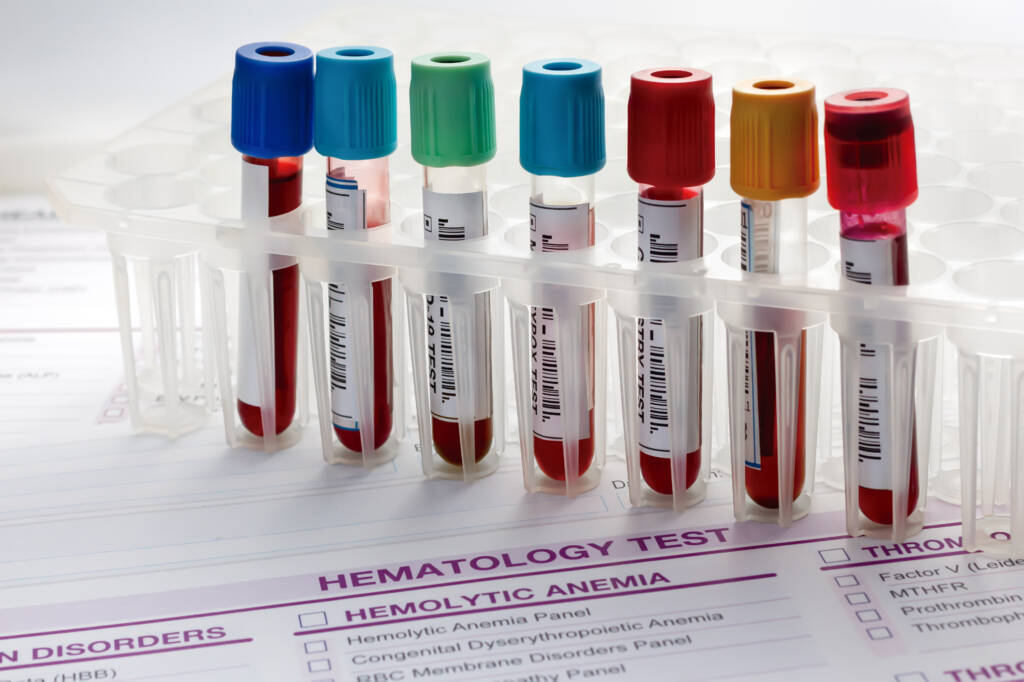
Collect 2 mL of serum using an SST tube. Allow the sample to clot upright for at least 30 minutes, then centrifuge within 2 hours of collection. Keep the specimen refrigerated.
Note: In otherwise healthy smokers, 95% of patients typically fall within the range 0.0–5.5 ng/mL.
Avoid collecting samples from patients taking high doses of biotin (more than 5 mg/day) until at least 8 hours after the last dose
Container Type
Serum Separator Tube
Alternate Specimen Requirements
Acceptable alternatives include:
- 2 mL Serum from a plain red-top tube. Allow to clot upright for at least 60 minutes, then centrifuge and transfer serum to a plastic transport tube within 2 hours of collection. Clearly label the tube as Serum from a Plain Red-Top Tube. Keep Refrigerated.
- The same Note applies: in otherwise healthy smokers, 95% of patients fall within the range 0.0–5.5 ng/mL, and samples from patients taking high-dose Biotin (>5 mg/day) should not be collected until at least 8 hours after the last administration.
Minimum Volume
- Adult: 1 mL Serum
- Pediatric: 0.2 mL Serum (not sufficient for repeat or additional testing)
Transport Temperature
Refrigerated
Expected Turnaround Time
1 Day
Specimen Stability
- Room Temperature: 1 Week
- Refrigerated: 2 Weeks
- Frozen: 6 Months
Methodology
Roche COBAS Electrochemiluminescent Immunoassay (ECLIA), traceable to the 1st IRP WHO method, or another automated chemistry method.
Overview
Carcinoembryonic Antigen (CEA) is a glycoprotein naturally produced in normal mucosal cells but found at elevated levels in certain adenocarcinomas — most notably colorectal cancer. Increases in CEA can also occur in cancers of the breast, lung, and stomach, as well as in non-cancerous conditions such as tobacco use.
Discovered in 1965, CEA was the first blood test developed to help detect cancer. The term carcinoembryonic refers to its production both by some cancer cells (“carcino”) and by the developing fetus (“embryonic”).
CEA testing is not recommended for cancer screening or for diagnosing undetermined illnesses. It should only be ordered after a malignancy has been confirmed. Following successful surgical removal of a tumor, elevated CEA levels typically normalize within 4–6 weeks. The primary role of this test is to monitor for recurrence after curative treatment of colorectal cancer.
When CEA levels return to normal after surgery but later rise again, recurrence is suspected — this occurs in nearly half of patients who experience cancer relapse.
(Locker, 2006)
Clinical Significance
- Not recommended as a screening tool or for diagnosing undefined illnesses.
- Ordered after malignancy is confirmed, to assist with staging and treatment planning.
- Serves as a standard tumor marker for monitoring colorectal cancer, and is also used in breast, lung, and stomach cancers.
- The European Group on Tumor Markers (EGTM) recommends combining CEA with CA 15-3 to improve detection sensitivity in metastatic breast cancer.
- When elevated at diagnosis, CEA can be used to monitor treatment response and detect recurrence.
- For high-risk patients (Stage II or III), testing is advised every 2–3 months for at least 3 years, especially if surgery or chemotherapy for metastatic disease is a possible option.
- Rising post-treatment CEA levels may indicate recurrence — sometimes months or years before clinical signs appear.
- A small increase may suggest local recurrence.
- A large rise may indicate hepatic metastasis.
- An increase in CEA should prompt further evaluation such as CT scans or follow-up procedures.
Interpretative Information
Although elevated preoperative CEA levels (≥5 mcg/L) can indicate a worse prognosis, current data do not support using CEA to determine whether a patient should receive adjuvant therapy.
Limitations
- Because of inter-lab variability, repeat testing should always be performed by the same laboratory using the same method.
- False negatives can occur in patients with early-stage or even metastatic disease.
- Radiation therapy, tumor necrosis, and certain chemotherapy agents (e.g., oxaliplatin) may cause temporary CEA spikes. Testing should be delayed until after treatment.
- Elevated levels can also appear in benign conditions such as:
- Cigarette smoking
- Peptic ulcer disease
- Inflammatory bowel disease
- Pancreatitis
- Hypothyroidism
- Cirrhosis
- Biliary obstruction
References
American Society of Clinical Oncology. Clinical Practice Guidelines for the Use of Tumor Markers in Breast and Colorectal Cancer. J Clin Oncol. 1996; 14(10):2843–77. PMID: 8874347
Harris L, Fritsche H, Mennel R, et al. ASCO 2007 Update of Recommendations for the Use of Tumor Markers in Breast Cancer. J Clin Oncol. 2007; 25(33):5287–312. PMID: 17954709
Locker GY, Hamilton S, Harris J, et al. ASCO 2006 Update of Recommendations for the Use of Tumor Markers in Gastrointestinal Cancer. J Clin Oncol. 2006; 24(33):5313–27. PMID: 17060676
Perkins GL, Slater ED, Sanders GK, et al. Serum Tumor Markers. Am Fam Physician. 2003; 68(6):1075–82. PMID: 14524394
Diagnostic Role
In patients with an elevated pretreatment CEA level, this marker is preferred for monitoring metastatic colorectal cancer during systemic therapy.
- CEA should be measured prior to treatment initiation and every 2–3 months during active therapy.
- It should also be followed every 2–3 months for at least 3 years post-treatment in high-risk patients, especially when resection of liver metastasis is clinically possible.
- Persistent CEA elevation above baseline suggests possible recurrence, even if imaging shows no metastases. However, elevated CEA alone should not be used as the sole basis for systemic therapy decisions.
- A temporary increase may occur during the first 4–6 weeks of a new treatment regimen.
Alias
Carcinoembryonic Antigen
Test Setup Days
Monday through Friday PM shift
CPT
82378 Limited Coverage Test For Medicare.
Advance Beneficiary Notice Of Non-Coverage (ABN) Required
If Diagnosis Is Not Covered.
LOINC: 2039-6
Reference Range
<=3.8 NG/MLML
OTHERWISE HEALTHY SMOKERS: 0.0-5.5 NG/ML
| UNIT CODE | UNIT CODE NAME | ANALYTE | GENDER | AGE | REFERENCE RANGE | Units of Measure |
|---|---|---|---|---|---|---|
| 2645 | CEA | CEA | NOT SPECIFIED | ALL | <=3.8 | NG/ML |
| 2645 | CEA | CEA | MALE | ALL | <=3.8 | NG/ML |
| 2645 | CEA | CEA | FEMALE | ALL | <=3.8 | NG/ML |