
Order Code
2690
Preferred Specimen
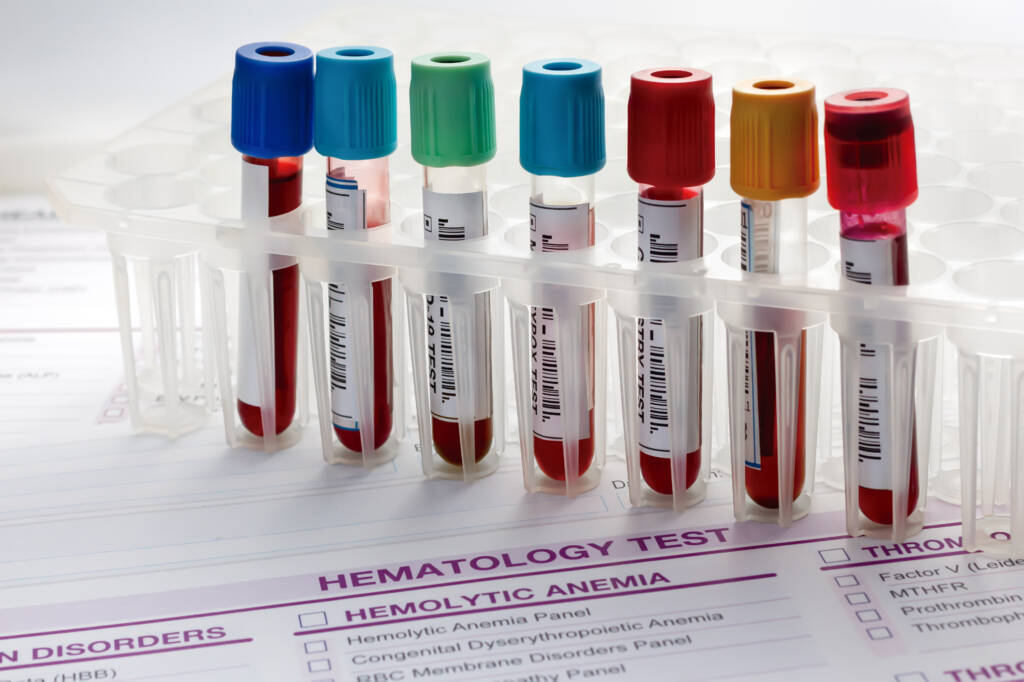
Collect 5 mL of whole blood in EDTA tubes. A hematocrit value is necessary for calculation purposes. Please provide two lavender-top tubes. Specimens must be refrigerated immediately and labeled as Critical Refrigerate (CRF).
ContainerType
EDTA (lavender top) tube
Minimum Volume
5 mL in 2 lavender top tubes
Transport Temperature
Critical Refrigerated (CRF)
Specimen Stability
3 hours room temperature; 2 days refrigerated;
1 month frozen
Methodology
Roche COBAS electrochemiluminescent
immunoassay (ECLIA)
Overview
Folate, naturally present in foods, and folic acid, the synthetic form used in supplements and fortification, are both vital forms of vitamin B9. Folate status can be assessed through several methods, including serum folate and red blood cell (RBC) folate measurements. Serum folate reflects the circulating folate concentration at the time of collection but is heavily influenced by recent dietary intake. Conversely, since about 95% of folate is stored within erythrocytes during their development, RBC folate provides a more accurate indication of the body’s folate reserves and only declines after roughly four months of insufficient folate intake (Mayo, 2013).
Traditionally, RBC folate has been regarded as the preferred marker for assessing long-term folate status. However, the increasing availability and use of serum or plasma homocysteine measurements are gradually replacing the more complex and costly RBC folate assay.
Clinical Significance
- Follow-up test for folate deficiency evaluation when serum folate levels are inconclusive
- Due to the wide availability of homocysteine levels which are an early and sensitive indicator of folate deficiency, the RBC folate test is being ordered much less often.
- Not indicated as a screening test for folate deficiency as it does not differentiate between folate deficiency and primary vitamin B12 deficiency (which blocks ability of cells to take up folate)
Additional Information
In some geographic regions of the world, serum folate and RBC folate levels remain standard of care over an evaluation consisting of homocysteine and/or methylmalonic acid levels. A low serum folate alone does not distinguish between negative folate dietary balance and total body folate depletion, and as such may be followed with a RBC Folate level. Interpretation is as follows:
| Normal RBC Folate Level | Decreased RBC Folate Level | |
|---|---|---|
| Decreased Serum Folate Level | Negative folate balance or False normal due to recent blood transfusion | Significant tissue folate depletion or Severe B12 deficiency |
Interpretative Information
Decreased Level:
- Insufficient intake (very rare, but may be seen in anorexia, alcoholism)
- Malabsorption (eg, celiac disease, inflammatory bowel disease)
- Certain medications which interfere with absorption or metabolism (eg, phenytoin, methotrexate, valproic acid, proton pump inhibitors, H2 blockers)
- Increased need (eg, pregnancy, lactation, chronic hemolytic anemia)
- Presence of a primary vitamin B12 deficiency blocking the ability of cells to take up folate
Increased Level:
- Very uncommon, but may be associated with a diet rich in folate, or excessive folic acid supplements
- May, very rarely, reflect low vitamin B12 levels as B12 deficiency results in the inability of cells to metabolize folate with consequent rise in folate levels
Limitations
- Analytical imprecision due to the need for manual sample preparation as well as variability among procedures to completely lyse red blood cells (Mayo, 2013)
- Analytical imprecision between samples due to varying oxygen saturation of hemoglobin where red cell folate results are increased by lower oxygen saturation levels and decreased by higher oxygen saturation levels (Farrell, 2013)
- False low:
- Ambient thawing of whole blood can cause significant loss of measurable folate:
- >90% recovery at 4℃ up to four days
- >80% recovery at 22℃ up to four days (Balion, 2011)
- Pregnancy, alcoholism, severe B12 deficiency
- Ambient thawing of whole blood can cause significant loss of measurable folate:
- False normal:
- Following blood transfusions
References
Balion C, Kapur BM. Folate. Clinical Utility of Serum and Red Blood Cell Analysis. Clinical Laboratory News. 2011. http://www.aacc.org/publications/cln/2011/january/Pages/Folate.aspx. Accessed February 4, 2014.
Clement NF, Kendall BS. Effect of Light on Vitamin B12 and Folate. Lab Medicine. 2009;40:657-659. Available athttp://labmed.ascpjournals.org/content/40/11/657.full . Accessed February 4, 2024.
Farrell CJ, Kirsch SH, Herrmann M. Red cell or serum folate: what to do in clinical practice? Clin Chem Lab Med. 2013 Mar;51(3):555-569.23449524
Galloway M, Rushworth L. Red cell or serum folate? Results from the National Pathology Alliance benchmarking review. J Clin Pathol. 2003;56(12):924-926.14645351
Mayo Medical Laboratories. Red Cell Folate Testing. Unwarranted and Overutilized in the Era of Folic Acid Supplementation. 2013. http://www.mayomedicallaboratories.com/articles/hottopics/transcripts/2010/2010-11a-rbc/11a-2.html. Accessed February 4, 2014.
Mastropaolo W, Wilson MA. Effect of light on serum B12 and folate stability. Clin Chem. 1993;39(5):913. 8485895
National Institutes of Health Office of Dietary Supplements. Folate. Published 2012. http://ods.od.nih.gov/factsheets/Folate-HealthProfessional/. Accessed December 30, 2013.16585338
World Health Organization. Serum and red blood cell folate concentrations for assessing folate status in populations. Vitamin and Mineral Nutrition Information System. Geneva, World Health Organization. Published 2012. http://apps.who.int/iris/bitstream/10665/75584/1/WHO_NMH_NHD_EPG_12.1_eng.pdf. Accessed January 23, 2014.
Diagnostic Role
The RBC folate concentration has historically been considered a reliable indicator of tissue folate sufficiency as it reflects the several-month time-averaged value of the folate available to red blood cell production. This is in contrast to serum folate levels which are markedly influenced by daily dietary changes. However, due to the higher cost and technical constraints associated with the more cumbersome RBC folate test, serum folate remains the first-line test to determine folate sufficiency/insufficiency. When serum folate levels are inconclusive, RBC folate has commonly been the follow-up test ordered. Examples of such clinical situations include:
- Serum folate levels in the borderline range of 2-4 ng/mL
- Suspicion of combined B12 and folate deficiency
- Suspicion of false normal serum folate level (eg, patient with history of malnourishment but with recent normal meal intake, which may be as little as one to two well-rounded hospital meals)
It is important to recall that a low RBC folate level does not differentiate between folate deficiency and primary vitamin B12 deficiency blocking the ability of cells to take up folate. In the latter case, the proper therapy would be vitamin B12 rather than folic acid.
The RBC folate test is now used much less often in the clinical evaluation of suspected folate deficiency (eg. megaloblastic anemia) given the advent of the widespread availability of homocysteine levels which are more sensitive in detecting early folate deficiency (Farrell, 2013).
Test Setup Days
Monday through Friday
CPT
82747, 85014 Limited Coverage Test For Medicare.
Advance Beneficiary Notice Of Non-Coverage (ABN)
Required If Diagnosis Not Covered.