
Order Code
2700
Preferred Specimen
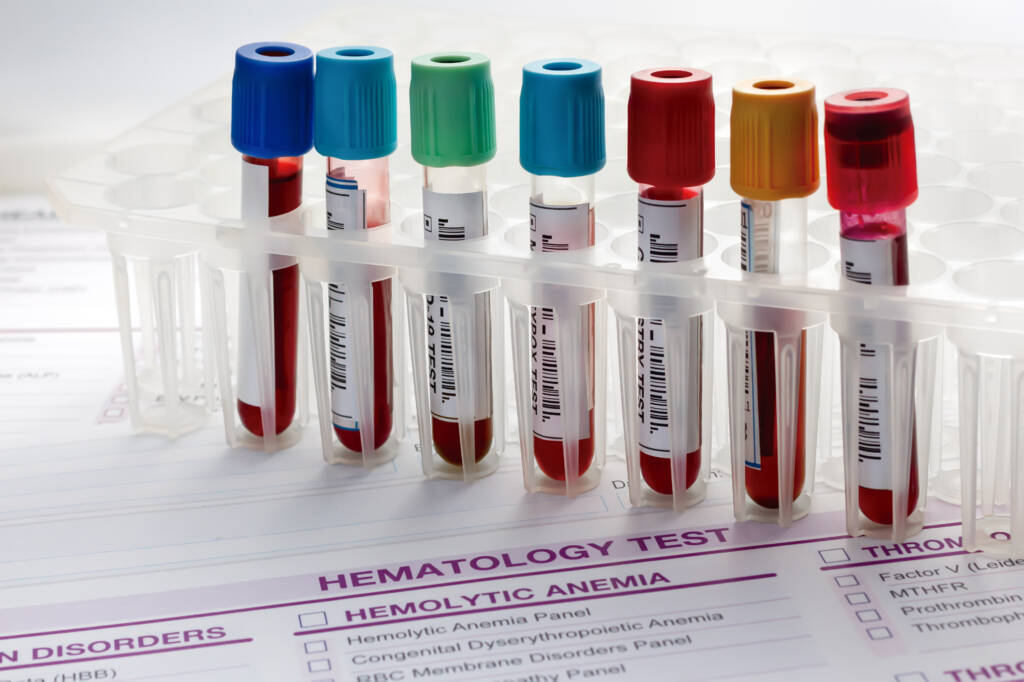
- 2 mL serum in SST tube
- Allow to clot upright for ≥30 minutes
- Centrifuge within 2 hours of collection
- Refrigerate after processing
ContainerType
Serum separator tube
Alternate Specimen Requirements
- 2 mL serum from a plain red top tube
- Allow to clot upright for ≥60 minutes
- Centrifuge and transfer serum to plastic transport tube within 2 hours
- Label as serum from a plain red top tube
- Refrigerate after processing
Minimum Volume
Adult: 0.5 mL serum
Pediatric: 0.2 mL serum (does not allow for repeat or
additional testing).
Transport Temperature
Refrigerated
Expected Turnaround Time
1-2 days
Specimen Stability
5 days room temperature; 2 weeks refrigerated; 6 months frozen. Allow only one freeze/thaw cycle.
Methodology
Roche COBAS Electrochemiluminescent Immunoassay (ECLIA) this method has been standardized against the enzyme-test fsh method. This in turn has been standardized against the 2nd irp WHO reference standard 78/549. Note: STAT or regional laboratories may use different methodology and/or manufacturer.
Overview
Follicle-stimulating hormone (FSH) is glycoprotein gonadotropic hormone produced by the pituitary gland. It is composed of an α and β subunit. The α subunit is identical to that of luteinizing hormone (LH), thyroid stimulating hormone (TSH), and human chorionic gonadotropin (hCG). Specificity resides in the β subunits. In females, FSH promotes the development of ovarian follicles and stimulates secretion of estradiol from the maturing follicles. Used clinically, FSH is an indirect assessment of ovarian function. In males, FSH stimulates spermatogenesis.
Clinical Significance
- Evaluation of menstrual irregularities:
- Primary amenorrhea (absence of menses by age 16 with secondary sexual characteristics or by age 14 without secondary sexual characteristics)
- Secondary amenorrhea (absence of menses for 6 months in a previously menstruating female)
- Oligomenorrhea (menses more than 35 days apart)
- Anovulatory bleeding
- Used during infertility evaluation for both males and females
Additional Information
Females:
FSH is secreted by the pituitary gland along with LH in response to pulsatile release of gonadotropin releasing hormone (GnRH) from the hypothalamus. Both FSH and LH secretion vary over the course of the menstrual cycle. During the follicular phase of the menstrual cycle (first day of menses through ovulation), FSH stimulates the growth of ovarian follicles, especially the dominant follicle, and induces production of estrogen. LH peaks at time of ovulation. Levels then decline after ovulation and during the luteal phase (ovulation to start of menses).
FSH and LH are under complex regulation by hypothalamic GnRH and by gonadal sex hormones (estrogen, progesterone). On the simplest level, when estrogen levels are low, FSH is released to stimulate ovarian follicle development and estrogen production. When estrogen levels are elevated, FSH release is suppressed. FSH is also regulated by inhibin B which is produced by the ovary. In general, low inhibin levels stimulate FSH secretion.
FSH is used as a test of ovarian reserve for the purpose of predicting potential fertility in women participating in assisted reproductive technologies. Either a basal serum FSH level alone is done on day 3 of the menstrual cycle or a clomiphene citrate challenge test (CCCT) is done. In the latter, a basal FSH level is done on day 3 of the cycle. Then, on each of days 5-9, 100 mg of oral clomiphene citrate is given. On day 10 another serum FSH level is done. Elevated results on either day 3 or day 10 are consistent with a positive test for infertility. Overall, the CCCT is 26% sensitive and 98% specific with a positive predictive value of 96% and a negative predictive value of 42%. (Barnhart, 1998)
A single FSH measurement is not accurate in determining menopausal status. During the menopausal transition, FSH levels vary as there are increasing numbers of anovulatory cycles. A greater rise in FSH is seen when there has been more than 3 months of amenorrhea. Therefore, the determination of menopausal status should be relative to the menstrual history, where menopause is defined as more than 12 months of consecutive amenorrhea. A significant elevation of FSH and decrease in estradiol level is then seen. (Burger, 2007)
Males:
Again, FSH is secreted by the pituitary gland along with LH in response to pulsatile release of gonadotropin releasing hormone (GnRH) from the hypothalamus. FSH secretion is mostly regulated by inhibin B where as LH secretion is controlled by testosterone. FSH stimulates the Sertoli cells of the testis and both FSH and LH play an important role in normal spermatogenesis.
Interpretative Information
During the evaluation of amenorrhea and anovulation in females and hypogonadism in males, FSH, LH, and sex steroid levels (estrogen, progesterone, and testosterone) can be placed into three categories. In general, FSH and LH are elevated in conditions in which sex hormones cannot be elaborated and are decreased in conditions of hypothalamic/pituitary dysfunction.
Females:
- Hypergonadotropic hypogonadism: Elevated FSH, LH with decreased estrogen/progesterone:
- Seen with gonadal failure: Turner’s syndrome and other chromosomal abnormalities, gonadal dysgenesis, premature ovarian failure (chemotherapy, gonadal radiation, genetic disorders, autoimmune disorders), menopause
- Hypogonadotropic hypogonadism: FSH, LH, estrogen, progesterone are decreased
- Examples include congenital GnRH deficiency; pituitary gonadotropin deficiency; pituitary adenomas; Kallmann’s syndrome; hyperprolactinemia; hypothyroidism; and extreme stress, exercise, or eating disorders
- Eugonadism: FSH, LH, estrogen, and progesterone levels are all normal
- Chronic anovulation, such as polycystic ovarian disease, hyperprolactinemia, hypothyroidism, obesity. In polycystic ovarian disease, LH:FSH ratio is >2:1, but this is not used for diagnosis.
- Anatomic defects: Asherman’s syndrome, muellerian agenesis, labial agglutination
Males:
- Hypergonadotropic hypogonadism (elevated FSH, LH; low testosterone):
- Klinefelter’s syndrome; cryptorchidism; testicular failure from chemotherapy, radiation, alcohol abuse, testicular injury, and infection
- Hypogonadotropic hypogonadism (low FSH, LH; low testosterone):
- Hyperprolactinemia, Kallmann’s syndrome, hypothalamic and pituitary tumors and disorders
References
Backer LC, Rubin CS, Kieszak SM, et al, “Serum Follicle-Stimulating Hormone and Luteinizing Hormone Levels in Women Aged 35-60 in the U.S. Population: The Third National Health and Nutrition Examination Survey (NHANES III, 1988-1994),” Menopause, 1999, 6(1):29-35.10100177
Barnhart K and Osheroff J, “Follicle Stimulating Hormone as a Predictor of Fertility,” Curr Opin Obstet Gynecol, 1998, 10(3):227-32. 9619346
Burger HG, Hale GE, Robertson DM, et al, “A Review of Hormonal Changes During the Menopausal Transition: Focus on Findings From the MelbourneWomen’s Midlife Health Project,” Human Reprod Update, 2007, 13(6):559–65.17630397
Fritz MA and Speroff L, “Hormone Biosynthesis, Metabolism, and Mechanism of Action,” Clinical Gynecologic Endocrinology and Infertility, 8th ed, Philadelphia PA: Lippincott Williams and Wilkins, 2011.
Fritz MA and Speroff L, “Neuroendocrinology,” Clinical Gynecologic Endocrinology and Infertility, 8th ed, Philadelphia PA: Lippincott Williams and Wilkins, 2011.
Fritz MA and Speroff L, “Amenorrhea,” Clinical Gynecologic Endocrinology and Infertility, 8th ed, Philadelphia PA: Lippincott Williams and Wilkins, 2011.
Lin J. Follicle-Stimulating Hormone. Medscape. 2012.
Wu AHB, ed. Tietz Clinical Guide to Laboratory Tests. 4th ed. St. Louis, MO: WB Saunders/Elsevier; 2006.
Alias
- Fsh
Test Setup Days
Monday through Friday PM shift
CPT
83001 LOINC: 26874-8
Reference Range
MALES FEMALES
AGE: 4 WEEKS-5 MONTHS <=4.1 IU/L <=14.2 IU/L
6 MONTHS-2 YEARS 0.3-2.2 IU/L 1.4-8.0 IU/L
3-4 YEARS 0.3-2.3 IU/L 0.6-5.0 IU/L
5-6 YEARS 0.3-2.0 IU/L 0.5-3.2 IU/L
7-9 YEARS 0.3-2.6 IU/L 0.4-4.4 IU/L
10-12 YEARS 0.5-4.9 IU/L 0.7-8.3 IU/L
13-15 YEARS 1.1-7.4 IU/L 1.0-9.1 IU/L
16-17 YEARS 0.9-7.8 IU/L 0.4-9.9 IU/L
>=18 YEARS 1.5-12.4 IU/L
FOLLICULAR 3.5-12.5 IU/L
MID-CYCLE PEAK 4.7-21.5 IU/L
LUTEAL PHASE 1.7-7.7 IU/L
POSTMENOPAUSAL 25.8-134.8 IU/L
FOR PATIENTS BETWEEN 10-17 YEARS:
TANNER I 0.3-2.9 IU/L 0.4-6.5 IU/L
TANNER II 0.4-4.8 IU/L 1.0-8.4 IU/L
TANNER III 1.0-6.6 IU/L 1.0-9.5 IU/L
TANNER IV/V 1.0-8.2 IU/L 0.6-9.4 IU/L
| UNIT CODE | UNIT CODE NAME | ANALYTE | GENDER | AGE | REFERENCE RANGE | Units of Measure |
|---|---|---|---|---|---|---|
| 2700 | FSH | FSH | NOT SPECIFIED | ALL | SEE BELOW | IU/L |
| 2700 | FSH | FSH | MALE | 0Y | 1.5-12.4 | IU/L |
| 2700 | FSH | FSH | MALE | 17Y | SEE BELOW | IU/L |
| 2700 | FSH | FSH | MALE | 150Y | 1.5-12.4 | IU/L |
| 2700 | FSH | FSH | FEMALE | 0Y | SEE BELOW | IU/L |
| 2700 | FSH | FSH | FEMALE | 17Y | SEE BELOW | IU/L |
| 2700 | FSH | FSH | FEMALE | 150Y | SEE BELOW | IU/L |