
Order Code
2760
Preferred Specimen
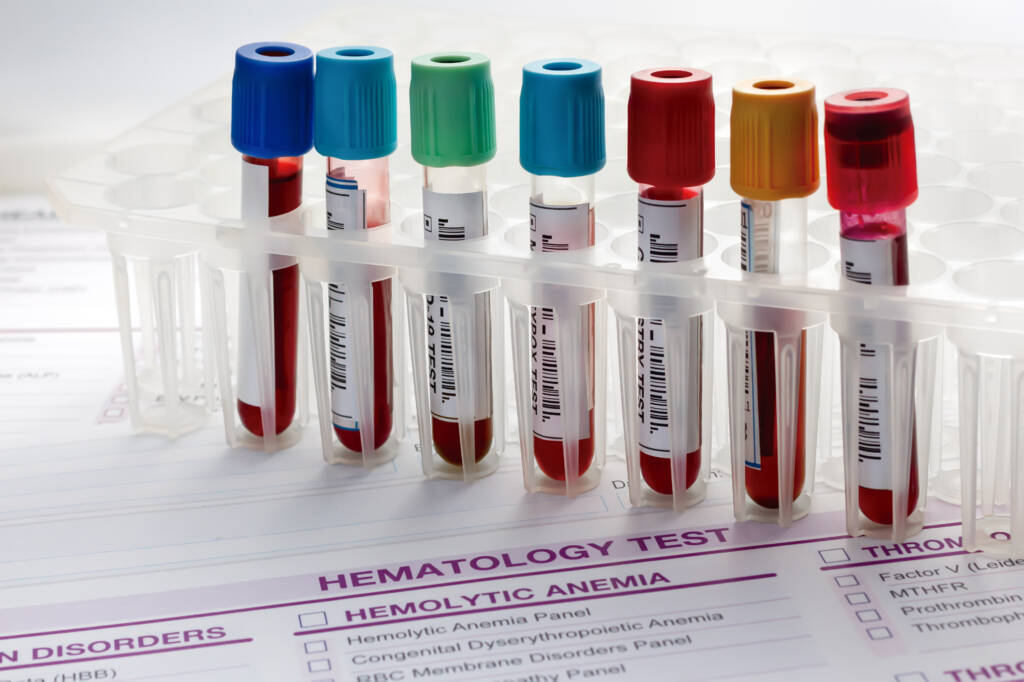
Collect 2 mL of serum in an SST tube. Allow the blood to clot upright for a minimum of 30 minutes, then centrifuge the sample within 2 hours of collection. Keep refrigerated.
Note: Do not collect specimens from patients currently receiving high doses of biotin (>5 mg/day) until at least 8 hours have passed since their last biotin dose.
ContainerType
Serum separator tube
Alternate Specimen Requirements
Obtain 2 mL of serum using a plain red top tube. Let the sample clot upright for at least 60 minutes, then centrifuge and transfer the serum into a plastic transport tube within 2 hours of collection. Clearly label the tube as serum from a plain red top tube. Refrigerate.
Note: Avoid sampling patients on high-dose biotin therapy (>5 mg/day) until a minimum of 8 hours after their last biotin administration.
Minimum Volume
0.5 mL serum
Transport Temperature
Refrigerated
Expected Turnaround Time
1 day
Specimen Stability
4 days room temperature; 4 days refrigerated; 6 months frozen
Methodology
Roche COBAS Electrochemiluminescence Immunoassay (ECLIA) this method has been standardized using the 1st irp WHO reference standard 66/304 (NIBSC).
Rejection Criteria
- Hemolysis
allow only one freeze/thaw cycle
Overview
Insulin is one of several polypeptide hormones produced by the beta cells within the pancreatic islets of Langerhans, alongside proinsulin and C-peptide. It is secreted into the bloodstream in response to rising glucose levels after meals and plays a critical role in promoting glucose uptake and glycogen synthesis, as well as facilitating triglyceride storage and skeletal muscle protein synthesis. Insulin functions to counterbalance glucagon and other catabolic hormones such as epinephrine, glucocorticoids, and growth hormone, thereby maintaining plasma glucose homeostasis.
Insulin measurements, in conjunction with glucose and C-peptide levels, assist in identifying causes of hypoglycemia (blood glucose <55 mg/dL), especially when symptoms are present. Testing is also valuable in assessing insulin resistance by evaluating insulin and glucose levels at standardized time points.
Interpreting insulin assays can be complex because they detect both endogenous and exogenous insulin. Additionally, assay results may be influenced by insulin-like growth factors 1 and 2 due to potential cross-reactivity depending on the testing method used.
Clinical Significance
- Evaluation of hypoglycemia (symptoms include sweating, palpitations, dizziness, change in mental status or seizures) of no recognized cause
- Diagnose insulin producing tumors (insulinoma), confirm their successful removal, and monitor for recurrence
- Identify insulin resistance
- Determine appropriate timing to initiate insulin supplementation to oral medication in diabetes type 2
- When assessed in both total and bound forms, aids in determining insulin dosage for insulin-dependent diabetics with insulin antibodies
- Not used to diagnose diabetes mellitus
Additional Information
Pancreatic beta cells synthesize preproinsulin, which is processed into three measurable components: proinsulin, insulin, and C-peptide. While these peptides are commonly assessed during hypoglycemia evaluation, they are not routinely used for diabetes diagnosis or management.
Insulin’s molecular structure is highly conserved across species. Porcine and bovine insulin closely resemble human insulin and have been used therapeutically since 1922. Recombinant human insulin, introduced in 1982, has been the exclusive form available in the U.S. since 2006.
Symptoms of hypoglycemia vary by age and underlying health. Infants may exhibit sweating, poor feeding, hypotonia, lethargy, seizures, or coma. Older children and adults may report nausea, diaphoresis, or nonspecific malaise. Neurologic manifestations include altered mental status, focal deficits mimicking stroke, or seizures. Patients post-gastric bypass may experience hypoglycemia 1 to 3 hours after meals for up to 1–2 years following surgery.
Diabetes mellitus is classified broadly into type 1 and type 2 based on pancreatic insulin production and the body’s response to insulin. Latent autoimmune diabetes in adults (LADA or type 1.5) is considered by some experts as a subtype of type 1, an aggressive form of type 2, or a distinct entity.
Type 2 diabetes, formerly adult-onset diabetes, arises when pancreatic insulin secretion is insufficient relative to demand, resulting in “relative” insulin deficiency or insulin resistance. Initial treatment typically includes lifestyle modifications such as diet, exercise, and weight loss, followed by oral hypoglycemics and, if necessary, insulin therapy.
Type 1 diabetes, previously juvenile-onset, results from autoimmune destruction of pancreatic beta cells, leading to little or no insulin production. Without insulin, glucose uptake is impaired, and fat is used as an alternative energy source, causing ketoacidosis and potentially fatal electrolyte imbalances. Lifelong insulin therapy is required.
Type 1.5 diabetes (LADA) is characterized by a gradual autoimmune destruction of beta cells occurring over months to years, accounting for approximately 2% to 12% of diabetes cases. Typically diagnosed in adults over 30, patients initially maintain some insulin production and may respond to oral medications but eventually require insulin therapy. Diagnosis often involves detecting autoantibodies such as GAD (more common) or IA-2 (more specific). Absence of antibodies does not exclude LADA, as seroconversion may occur later. Patients usually have normal body weight and lack insulin resistance.
Interpretative Information
Increased insulin level
- Increased insulin secretion:
- Insulinoma (sporadic or multiple endocrine neoplasias subtype 1)
- Use of insulin secretagogues which increase pancreatic insulin secretion (sulfonylureas such as glyburide, glipizide and glimepiride; glinides such as repaglinide and nateglinide)
- Increased insulin resistance with compensatory insulin hypersecretion:
- Obesity
- Diabetes type 2, early stage
- Corticosteroid use
- Cushing syndrome
- Acromegaly
- Decreased insulin degradation and/or clearance:
- Advanced liver disease
- Heart failure with associated passive liver congestion
- Renal insufficiency
- Excessive exogenous insulin use
- Autoimmunity to insulin or insulin receptors
Decreased insulin level
- Diabetes type 1
- Diabetes type 2, late stage
- Hypopituitarism
- Chronic pancreatitis (eg, due to cystic fibrosis, alcohol)
- Pancreatic damage (eg, autoimmune, cancer, trauma, postsurgery)
Limitations
- False negative results:
- ATK2 insulin mutation is poorly/not detected with current assays (Arya 2014)
- Hemodialysis
- Use of certain medications such as metformin, acarbose, octreotide or beta-blockers
- False postive results:
- Use of certain medication such as insulin secretagogues, beta-2 agonists, estrogen, steroids
- Anti-insulin antibodies as well as human anti-mouse antibodies (HAMA) may interfere with the assay causing inaccurate results (Klee 2000)
- Insulin analogues have wide and variable cross-reactivity ranging from 100% (recombinant insulin such as Novolin N and Novolin R) to approximately 50% (detemir), to negligible (glulisine) (Heurtault 2014)
- Serial or multiple insulin assays should be performed at the same laboratory to ensure consistency as different assays react variably with exogenous insulin
- Requires concurrent serum glucose and C-peptide levels for proper interpretation
References
Ali ZA. Insulinoma. Medscape website. http://www.medscape.com/. Updated Mar 03, 2015. Accessed June 11, 2015.
Arya VB, Flanagan SE, Schober E, Rami-Merhar B, Ellard S, Hussain K. Activating AKT2 mutation: hypoinsulinemic hypoketotic hypoglycemia. J Clin Endocrinol Metab. 2014;99(2):391-394.24285683
Buppajarntham S. Insulin. Medscape website. http://www.medscape.com/. Updated Feb 14, 2014. Accessed May 25, 2015.
Cryer PE, Axelrod L, Grossman AB, et al. Evaluation and management of adult hypoglycemic disorders: an Endocrine Society Clinical Practice Guideline. J Clin Endocrinol Metab. 2009;94(3):709-728. 19088155
Duckworth WC, Kitabchi AE. Insulin metabolism and degradation. Endocr Rev. 1981;2(2):210-233.7028472
Frederick G. Banting – Nobel Lecture: Diabetes and Insulin. Nobelprize.org. Nobel Media AB 2014. Nobel Prize Website. http://www.nobelprize.org/nobel_prizes/medicine/laureates/1923/banting-lecture.html. Accessed June 10, 2015.
Hamdy O. Hypoglycemia. Medscape website. http://www.medscape.com/. Updated December 22, 2014. Accessed June 3, 2015.
Heurtault B, Reix N, Meyer N, et al. Extensive study of human insulin immunoassays: promises and pitfalls for insulin analogue detection and quantification. Clin Chem Lab Med. 2014;52(3):355-362.24150210
Klee GG. Human anti-mouse antibodies. Arch Pathol Lab Med. 2000;124(6):921-923.10835540
Nambam B, Aggarwal S, Jain A. Latent autoimmune diabetes in adults: A distinct but heterogeneous clinical entity. World J Diabetes. 2010;1(4):111-115.21537436
National Institutes of Health. Causes of diabetes. http://www.niddk.nih.gov/health-information/health-topics/Diabetes/causes-diabetes/Pages/index.aspx. June 2014. Accessed July24, 2015.
Olatunbosun ST. Insulin Resistance. Medscape website. http://www.medscape.com/. Updated January 30, 2015. Accessed May 27, 2015.
Painter PC, Cope JY, Smith JL. Reference Information for the Clinical Laboratory. In: Burtis CA, Ashwood ER, eds. Tietz Textbook of Clinical Chemistry. 3rd ed. Philadelphia, PA: WB Saunders Company; 1999:1820.
Service FJ. Diagnostic approach to adults with hypoglycemic disorders. Endocrinol Metab Clin North Am. 1999;28(3):519-532. 10500929
Service FJ. Hypoglycemic disorders. N Engl J Med. 1995;332(17):1144-1152.7700289
The MJ. Human insulin: DNA technology’s first drug. Am J Hosp Pharm. 1989;46(11 Suppl 2):S9-11.2690608
Diagnostic Role
Insulin testing is indicated for the evaluation of symptomatic hypoglycemia (blood glucose levels less than 55 mg/dL) to evaluate suspected abnormal insulin production (eg, insulinoma), and to evaluate insulin resistance (commonly seen in diabetes type 2) (Buppajarntham 2014).
Due to widespread misunderstanding and casual misuse of the term “hypoglycemia” in the nonmedical population, it is important to confirm that there are, indeed, hypoglycemic events prior to initiating an extensive evaluation for the etiology of hypoglycemia in a nondiabetic. Documentation of Whipple’s triad establishes the need for further evaluation:
- Clinical symptoms consistent with hypoglycemia (palpitations, sweatiness, confusion)
- Laboratory measured low blood glucose (less than 55 mg/dL) when symptoms are present (home glucometer readings not sufficient due to the inherent margin of error)
- Resolution of symptoms after blood glucose has been normalized (Cryer 2009)
A patient presenting with symptoms thought to be due to low blood glucose should have blood collected for glucose, C-peptide, proinsulin and beta-hydroxybutyrate levels. If the blood glucose is confirmed by laboratory testing to be less than 55 mg/dL, then the remaining tests are submitted. If Whipple’s triad is demonstrated, an oral hypoglycemic screen (sulfonylureas and glinides) and antibodies to insulin should be assessed. The insulin antibody test does not need to be drawn during the hypoglycemic event (Service 1999).
Diagnosis of endogenous hyperinsulism (eg, insulinoma), where insulin is secreted at a high rate independent from blood glucose levels, is based upon inappropriately elevated levels of insulin concurrent with hypoglycemia. Diagnosis is established during prolonged fasting (up to 72-hours) and includes elevated insulin, C-peptide, and proinsulin levels along with decreased blood glucose levels and a negative oral hypoglycemic screen (Ali 2005). Following surgical resection of an insulinoma, insulin and C-peptide levels are followed to confirm the effectiveness of treatment and to periodically monitor for recurrence.
Insulin testing may also be used to help diagnose insulin resistance, a condition where the tissues become less sensitive to the effects of insulin causing the pancreas to overcompensate and produce more insulin (Olatunbosun 2015). This may be seen in prediabetes, early diabetes type 2 and in polycystic ovarian syndrome.
Test Setup Days
Monday through Friday PM shift
CPT
83525 LOINC: 20448-7
Reference Range
2-21 UIU/ML
| UNIT CODE | UNIT CODE NAME | ANALYTE | GENDER | AGE | REFERENCE RANGE | Units of Measure |
|---|---|---|---|---|---|---|
| 2760 | INSULIN | RNDINS | NOT SPECIFIED | ALL | 2-21 | UIU/ML |
| 2760 | INSULIN | RNDINS | MALE | ALL | 2-21 | UIU/ML |
| 2760 | INSULIN | RNDINS | FEMALE | ALL | 2-21 | UIU/ML |