
Order Code
2222
Preferred Specimen
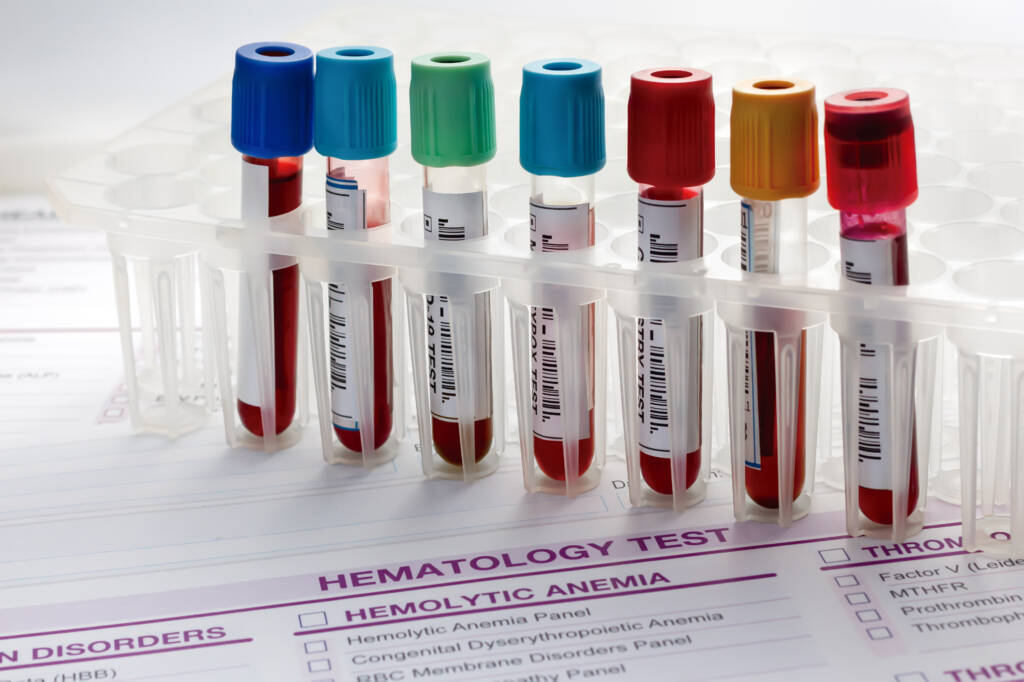
Collect 2 mL of serum. Allow the serum separator tube (SST) to clot upright for at least 30 minutes, then centrifuge within 2 hours of collection. Store the specimen refrigerated.
Container Type
Serum separator tube (SST)
Alternate Specimen Requirements
If SST is unavailable, collect 2 mL of serum using a plain red-top tube. Allow the sample to clot upright for at least 60 minutes, then centrifuge and transfer the serum to a plastic transport tube within 2 hours of collection.
Label clearly as serum from a plain red-top tube. Store refrigerated.
Minimum Volume
- Adult: 1 mL serum
- Pediatric: 0.2 mL serum (insufficient for repeat or additional testing)
Transport Temperature
Refrigerated
Expected Turnaround Time
1 day
Specimen Stability
- Room Temperature: Stable for up to 1 week
- Refrigerated: Stable for up to 3 weeks
- Frozen: Stable for up to 6 months
Methodology
Roche COBAS Colorimetric Gen 2
Rejection Criteria:
- Samples showing moderate or greater hemolysis
- EDTA plasma samples
- Oxalate plasma samples
Overview
Disorders affecting iron balance are among the most prevalent human diseases, typically involving iron deficiency or iron overload.
Because serum iron levels can fluctuate significantly in response to both physiologic and pathologic factors, additional tests are often required to fully evaluate a patient’s iron status. Measurements of total iron-binding capacity (TIBC) and ferritin are commonly used to aid interpretation.
Clinical Significance
- Support a diagnosis of iron deficiency
- Caused by poor dietary intake, malabsorption, or metabolic disturbances
- May also result from blood loss
- Support diagnosis of iron overload
- Primary (Hereditary Hemochromatosis, HH): Characterized by increased intestinal iron absorption with normal erythropoiesis. Excess iron is deposited in the liver and other organs, leading to fibrosis if untreated.
- Secondary (Hemosiderosis): Results from various conditions including thalassemia, repeated blood transfusions, or excessive iron supplementation (oral or parenteral).
- Used to calculate transferrin saturation (TS)
- Helps distinguish iron deficiency anemia from anemia of chronic disease, particularly when serum iron is low.
- Monitor iron replacement therapy through changes in transferrin saturation.
- Confirm iron toxicity (e.g., accidental overdose from vitamin ingestion in children) and monitor blood iron levels during treatment.
Interpretative Information
Increased Serum (Plasma) Iron:
- Seen in hemosiderosis, hemolytic anemias (especially thalassemia), sideroblastic anemias, hepatitis, acute hepatic necrosis, and hemochromatosis.
- May also occur with inappropriate iron therapy or in patients receiving multiple transfusions (e.g., thalassemia or chronic dialysis).
- Iron poisoning can produce markedly elevated levels, accompanied by vomiting, severe abdominal pain, metabolic acidosis, leukocytosis, and hyperglycemia, along with increased bilirubin, AST, ALT, and LD levels.
Decreased Serum (Plasma) Iron:
- Associated with insufficient dietary intake, chronic blood loss, or iron malabsorption.
- Can also result from impaired release of iron from stores during inflammation, infection, or chronic illness.
- Often observed during recovery from pernicious anemia, particularly soon after vitamin B12 therapy.
- Levels may decrease temporarily following myocardial infarction.
Limitations
- Hemolyzed samples can interfere with accurate serum (plasma) iron measurement.
- Serum iron concentration may not correlate directly with the severity or clinical phase of iron toxicity, since the test measures only circulating (free) iron, not intracellular iron, which causes tissue damage (Liebelt, 2013).
- In overdose situations, samples collected more than 8 hours after ingestion may yield falsely low results due to rapid clearance of iron from the bloodstream.
- Low iron levels do not always indicate deficiency—particularly in acute infection, chronic inflammation, or malignancy, where ferritin may be elevated despite low serum iron.
References
Angelucci E, Brittenham GM, McLaren CD, et al. Hepatic Iron Concentration and Total Body Iron Stores in Thalassemia Major. N Engl J Med, 2000; 343(5):327–31.
Andrews NC. Disorders of Iron Metabolism. N Engl J Med, 1999; 341(26):1986–95.
Brown EB. Iron Metabolism: A 40-Year Overview. Am J Med, 1989; 87(3N):35N–39N.
Bulaj ZJ, Ajioka RS, Phillips JD, et al. Disease-Related Conditions in Relatives of Patients With Hemochromatosis. N Engl J Med, 2000; 343(21):1529–35.
Burns ER, Goldberg SN, Lawrence C, et al. Clinical Utility of Serum Tests for Iron Deficiency in Hospitalized Patients. Am J Clin Pathol, 1990; 93(2):240–5.
Liebelt EL, Kronfol R. Acute Iron Poisoning. UpToDate®, 2013.
Wharton BA. Iron Deficiency in Children: Detection and Prevention. Br J Haematol, 1999; 106(2):270–80.
Diagnostic Role
A serum iron test alone provides limited diagnostic value except in cases of iron poisoning.
For accurate evaluation of iron status, serum iron should be interpreted in conjunction with TIBC or transferrin results.
See related test: Iron and Total Iron-Binding Capacity (TIBC).
Test Setup Days
Monday through Friday PM shift
CPT
83540 Limited Coverage Test For Medicare.
Advance Beneficiary Notice Of Non-Coverage (ABN) Required
If Diagnosis Not Covered.
LOINC: 2498-4
Reference Range
FEMALE: 37-145 UG/DL
MALE: 59-158 UG/DL
| UNIT CODE | UNIT CODE NAME | ANALYTE | GENDER | AGE | REFERENCE RANGE | Units of Measure |
|---|---|---|---|---|---|---|
| 2222 | IRON | IRON | NOT SPECIFIED | 0Y | 37-158 | UG/DL |
| 2222 | IRON | IRON | NOT SPECIFIED | 150Y | 37-158 | UG/DL |
| 2222 | IRON | IRON | MALE | 0Y | 59-158 | UG/DL |
| 2222 | IRON | IRON | MALE | 150Y | 59-158 | UG/DL |
| 2222 | IRON | IRON | FEMALE | 0Y | 37-145 | UG/DL |
| 2222 | IRON | IRON | FEMALE | 150Y | 37-145 | UG/DL |