
Order Code
1430
Preferred Specimen
- Completely filled citrate tube (light blue top).
- Do not open the tube. Maintain at Critical Room Temperature (CRT).
- This assay is not intended for monitoring therapeutic heparin anticoagulation.
- To assess heparin therapy, please contact your local CPL representative.
ContainerType
Completely filled citrate (light blue top) tube
Alternate Specimen Requirements
- 2 mL citrate plasma (light blue top).
- Immediately centrifuge and separate plasma from cells.
- Transfer plasma to a plastic transport tube and clearly label as citrate plasma.
- Freeze and maintain at Critical Frozen (CFZ) temperature.
- Submit separate tubes when multiple tests are ordered.
- This assay is not intended for heparin monitoring—contact your CPL representative for heparin testing.
Minimum Volume
Completely filled citrate tube
Transport Temperature
Critical Room Temperature (crt) for whole blood, Critical Frozen (cfz) for plasma
Expected Turnaround Time
1 day
Specimen Stability
Whole blood: 1 day room temperature if unopened plasma: 2 weeks frozen
Methodology
automated electromechanical clot detection Note: STAT or regional laboratory testing may use different methodology and/or manufacturer
Rejection Criteria
Hemolysis
clotted samples
samples submitted in tube that is not completely filled
samples submitted in inappropriate anticoagulant
samples submitted in expired tube
Overview
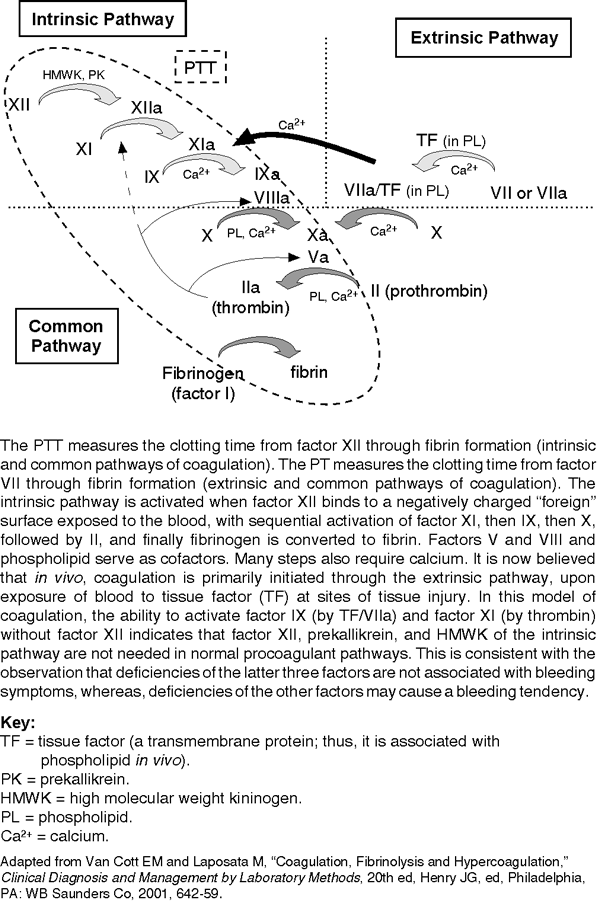
The activated partial thromboplastin time (aPTT or PTT) measures clotting time from the activation of factor XII, through the formation of fibrin clot (see figure). This measures the integrity of the intrinsic and common pathways of coagulation, whereas the prothrombin time (PT) measures the integrity of the extrinsic and common pathways of coagulation. PTT prolongations are caused by either factor deficiencies (especially of factors VIII, IX, XI, and/or XII), or inhibitors (most commonly, lupus anticoagulants, or medications such as heparin or argatroban).
Causes of PTT Prolongations
Hereditary:
- Deficiency of factor VIII, IX, XI, XII, prekallikrein, or HMWK (PT is normal)
- Deficiency of fibrinogen or factor II, V, or X (PT is also prolonged)
- Combined deficiencies
- von Willebrand disease (variable) (Zehnder, 2013)
Acquired:
Primary amyloidosis-associated factor X deficiency
Heparin administration (PT less affected than PTT, PT may be normal)
Inhibitors of factors VIII, IX, XI, or XII (PT normal except in the rare cases of an inhibitor against fibrinogen or factor II, V, or X)
Inhibitors of fibrinogen or factors II, V, or X
Acquired von Willebrand disease (due to presence of another condition or use of certain drugs) (Rick, 2013)
Lupus anticoagulants (PT usually normal)
Liver dysfunction (PT affected earlier and more than PTT)
Disseminated intravascular coagulation (DIC) (PT affected earlier and more than PTT)
Argatroban administration (PT usually also prolonged)
Severe vitamin K deficiency (PT affected earlier and more than PTT)
Combined heparin and warfarin administration
Clinical Significance
- Assess clotting function
- Screen for factor deficiencies of the intrinsic pathway (prekallikrein, high molecular weight kininogen [HMWK], factors VIII, IX, XI, and XII) and to a lesser extent the common pathway (fibrinogen and factors II, V, and X)
- Monitor unfractionated heparin (UFH) therapy
- Monitor direct thrombin inhibitor therapy (eg, argatroban, bivalirudin)
- Aid in the detection of coagulation inhibitors
- lupus anticoagulants
- specific factor inhibitors
- nonspecific inhibitors
Additional Information
Evaluation of Prolonged PTT
Many large labs now use factor assays and lupus anticoagulant screening instead of mixing studies.
- The initial step in unexplained prolonged PTT is to rule out heparin contamination, often by repeat draw or heparin neutralization tests.
- If heparin is excluded, a mixing study is generally performed next (see aPTT Mixing Studies).
- Mixing studies help distinguish whether the prolongation is due to a factor deficiency or an inhibitor.
Factor Deficiencies Affecting PTT - PTT is sensitive primarily to intrinsic pathway factor deficiencies: VIII, IX, XI, XII, prekallikrein, and high molecular weight kininogen (HMWK).
- If mixing studies suggest deficiency, assays for factors VIII, IX, XI, and XII may be done.
- If PT is also prolonged, assays for fibrinogen and factors II, V, VII, and X can be performed.
- Deficiencies of prekallikrein and HMWK are rare and do not cause bleeding despite prolonged PTT.
- Factor XII deficiency is relatively common but does not cause bleeding.
- If all factor assays are normal, lupus anticoagulant testing may be warranted, as lupus anticoagulants sometimes evade detection by mixing studies.
Inhibitors Prolonging PTT - Most inhibitors are antibodies such as lupus anticoagulants or specific factor inhibitors (e.g., factor VIII inhibitors).
- Anticoagulant drugs like heparin and argatroban can also prolong PTT.
- Lupus anticoagulants interfere with phospholipid-dependent coagulation steps, prolonging PTT but increasing thrombosis risk rather than bleeding.
- Factor VIII inhibitors are the most common specific factor inhibitors; mixing studies show characteristic patterns in their presence, warranting specific inhibitor assays.
- If lupus anticoagulant tests are negative but inhibitors are suspected, further factor assays and specific inhibitor testing may be performed.
Heparin Monitoring - Low-dose subcutaneous unfractionated heparin (e.g., 5000 units 2–3 times daily) usually does not require PTT monitoring because it doesn’t prolong PTT.
- Full therapeutic heparin doses are monitored via PTT and platelet counts to detect heparin-induced thrombocytopenia (HIT).
- Therapeutic PTT ranges are lab-specific but typically 1.5–2.5 times the normal mean PTT.
- Warfarin therapy overlaps with heparin for at least 5 days until INR is therapeutic.
- Heparin can mildly prolong PT/INR, and warfarin can mildly prolong PTT.
- Low molecular weight heparin (LMWH) usually does not prolong PTT and is monitored by antifactor Xa assays if necessary.
Heparin Resistance - Occurs when PTT does not prolong as expected despite high heparin doses.
- Commonly due to acute phase reactants binding and neutralizing heparin, or elevated factor VIII shortening PTT.
- Rarely caused by antithrombin deficiency.
- Mild antithrombin decreases during heparin therapy typically do not cause resistance.
- In suspected resistance, tests for acute phase markers (fibrinogen, factor VIII) and antifactor Xa assays may be useful.
Limitations
- With single factor deficiencies, the deficient factor has to be below 15% to 45% before the PTT becomes prolonged, depending on the reagent and the deficient factor. The PTT is more sensitive to intrinsic pathway factor deficiencies than to common pathway factor deficiencies. With multiple factor deficiencies, the PTT becomes prolonged with less severe decreases in factor levels. Factor VIII elevations shorten the PTT. Factor VIII elevations are common because they occur during acute phase reactions.
- Although PTT may detect factor deficiencies of the common pathway, it does not detect deficiencies of factors VII and XIII. PT is needed to screen for factor VII deficiency and a specific factor XIII assay can screen for factor XIII deficiencies.
- PF4 released from platelets neutralizes heparin and can falsely lower the PTT value. To minimize the amount of PF4 in specimens when monitoring heparin therapy, the specimen must be processed quickly – within 1 hour of collection. The laboratory should ensure that the plasma contains <10,000/μL platelets (<10 x 109/L) (eg, platelet-poor plasma). With or without heparin, plasma may be stored on ice for up to 4 hours; otherwise, store frozen.
- There are a number of biological variables that can interfere when using PTT to monitor heparin therapy. In each of these cases, the Heparin Anti-Xa assay may be more appropriate for monitoring heparin therapy.
- Factors that affect the pharmacokinetics or bioavailability of heparin. These include aging, obesity, changes in heparin-binding proteins, hepatic disease, renal disease, and heparin resistance.
- Factors that alter the PTT dose response to heparin. Increased factor VIII and/or fibrinogen levels (acute phase reactants), decreased antithrombin levels, or a mild reduction in multiple factors are examples of this type of complicating factor.
- Factors that cause an abnormal baseline PTT. Lupus anticoagulants or deficiency in contact factors can produce an extended baseline PTT.
- With very high doses of heparin, as used in cardiac bypass surgery, the PTT is unclottable (>150 seconds) and therefore not useful. The activated coagulation time (ACT) is typically used instead in such situations.
References
“Activated Partial Thromboplastin Time (APTT). A Practical Guide to Laboratory Haemostasis.” Available at http://www.practical-haemostasis.com/Screening%20Tests/aptt.html, Accessed June 24, 2013.
Adcock Funk DM, Lippi G, Favaloro EJ. Quality standards for sample processing, transportation, and storage in hemostasis testing. Semin Thromb Hemost. 2012 Sep;38(6):576-85. doi: 10.1055/s-0032-1319768. Epub 2012 Jun 16.22706973
Andrew M, Paes B, and Johnston M, “Development of the Hemostatic System in the Neonate and Young Infant,” Am J Pediatr Hematol Oncol, 1990, 12(1)95-104.2178462
Bajaj SP and Joist JH, “New Insights Into How Blood Clots: Implications for the Use of APTT and PT as Coagulation Screening Tests and in Monitoring of Anticoagulant Therapy,” Semin Thromb Hemost, 1999, 25(4):407-18.10548073
Bamberg R, Cottle JN, and Williams JC, “Effect of Drawing a Discard Tube on PT and APTT Results in Healthy Adults,” Clin Lab Sci, 2003, 16(1):16-9.12587654
“Ensuring Specimen Integrity: Proper Processing and Handling of Specimens for Coagulation Testing,” Mayo Medical Laboratories. Available at http://www.mayomedicallaboratories.com/articles/communique/2008/10update1.html . Accessed June 24, 2013.
Center for Phlebotomy Education. The Order of Draw: Do I have to follow it? https://www.phlebotomy.com/the-order-of-draw.html. Accessed April 12, 2021.
Clinical Laboratory Standards Institute (CLSI). Collection, Transport, and Processing of Blood Specimens for Testing Plasma-Based Coagulation Assays and Molecular Hemostasis Assays; Approved Guidelines. Fifth Edition. CLSI document H21-A5. Wayne, PA: Clinical Laboratory Standards Institute; 2008.
Clinical Laboratory Standards Institute (CLSI). Order of Blood Draw Tubes and Additives. https://clsi.org/about/blog/order-of-blood-draw-tubes-and-additives/. Published March 19, 2019. Accessed February 9, 2021.
Gottfried EL and Adachi MM, “Prothrombin Time and Activated Partial Thromboplastin Time Can Be Performed on the First Tube,” Am J Clin Pathol, 1997, 107(6):681-3.9169665
Hirsh J, Anand SS, Halperin JL, et al, “Guide to Anticoagulant Therapy: Heparin. A Statement for Healthcare Professionals From the American Heart Association,” Circulation, 2001, 103(24):2994-3018.11413093
Kearon C, Akl EA, Comerota AJ, et al, “Antithrombotic Therapy for VTE Disease: Antithrombotic Therapy and Prevention of Thrombosis, 9th ed: American College of Chest Physicians Evidence-Based Clinical Practice Guidelines,” Chest, 2012, 141(2 Suppl):e419S-94S.22315268
Kitchen S and Preston FE, “Standardization and Control of Heparin Therapy,” Advanced Laboratory Methods in Haematology, Part 6, Chapter 13, Rowan RM, van Assendelft OW, and Preston FE, eds, London, UK: Arnold, 2002, 293-315.
Olson JD, Arkin CF, Brandt JT, et al, “College of American Pathologists Conference XXXI on Laboratory Monitoring of Anticoagulant Therapy: Laboratory Monitoring of Unfractionated Heparin Therapy,” Arch Pathol Lab Med, 1998, 122(9):782-98.9740136
Rick ME, “Patient Information: von Willebrand Disease (Beyond the Basics),” UpToDate®, Basow DS, ed, Waltham, MA: UpToDate®, 2013. Available at http://www.uptodate.com.
Shapiro S, “Treating Thrombosis in the 21st Century,” N Engl J Med, 2003, 349(18):1762-4.14585945
Zehnder JL. Clinical Use of Coagulation Tests. In: Post TW, ed. UpToDate. Waltham, MA: UpToDate; 2017. https://www.uptodate.com/. Accessed April 27, 2018
Alias
- Aptt
- Partial thromboplastin time (ptt)
- Ptt (partial thromboplastin time)
Test Setup Days
Sunday through Saturday 24 hours a day
CPT
85730 Limited Coverage Test For Medicare.
Advance Beneficiary Notice Of Non-Coverage (ABN) Required
If Diagnosis Is Not Covered
LOINC: 12185-5
Reference Range
25.2-40.0 SECONDS
| UNIT CODE | UNIT CODE NAME | ANALYTE | GENDER | AGE | REFERENCE RANGE | Units of Measure |
|---|---|---|---|---|---|---|
| 1430 | CRT PTT | PTT | NOT SPECIFIED | ALL | 25.2-40.0 | SECONDS |
| 1430 | CRT PTT | PTT | MALE | ALL | 25.2-40.0 | SECONDS |
| 1430 | CRT PTT | PTT | FEMALE | ALL | 25.2-40.0 | SECONDS |