
Order Code
2790
Preferred Specimen
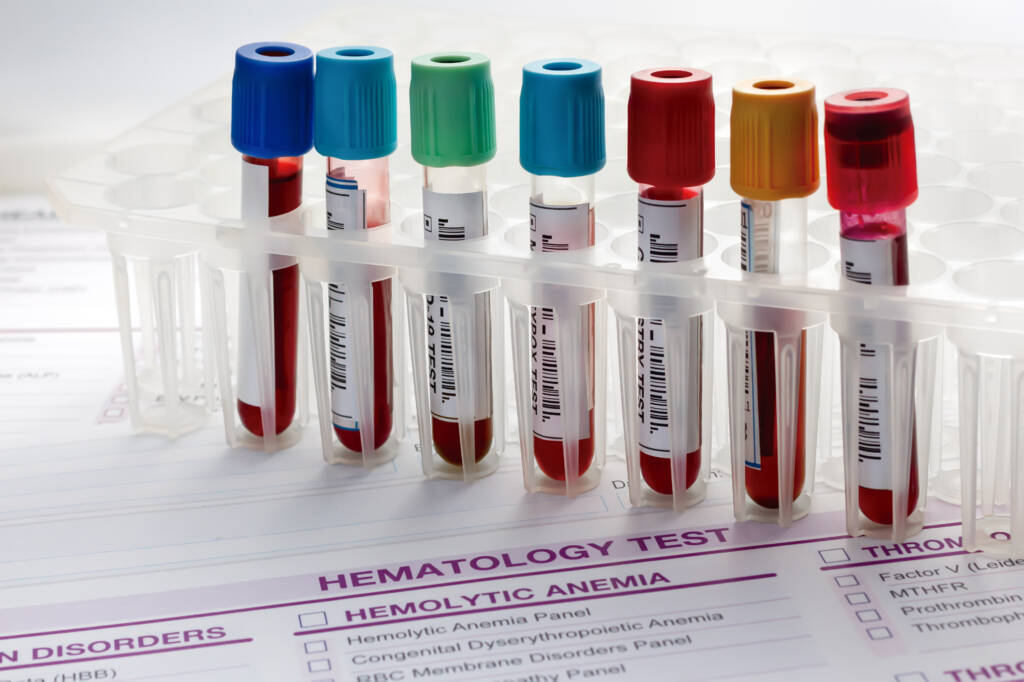
Collect 2 mL of serum. Allow the serum separator tube (SST) to clot upright for at least 30 minutes, then centrifuge the sample within 2 hours of collection. Store refrigerated.
Note: Avoid collecting samples from patients on high-dose biotin therapy (>5 mg/day) until at least 8 hours after the last biotin dose.
ContainerType
Serum separator tube
Alternate Specimen Requirements
Obtain 2 mL of serum using a plain red top tube. Let the sample clot in an upright position for a minimum of 60 minutes. Centrifuge and transfer the serum into a plastic transport tube within 2 hours of collection. Clearly label the tube as serum from a plain red top tube. Keep refrigerated.
Note: Do not collect samples from patients receiving high biotin doses (>5 mg/day) until a minimum of 8 hours following the last biotin intake.
Minimum Volume
Adult: 1 mL serum
Pediatric: 0.2 mL serum (does not allow for repeat or
additional testing).
Transport Temperature
Refrigerated
Expected Turnaround Time
1 day
Specimen Stability
1 day room temperature; 5 days refrigerated; 6 months frozen. Allow only one freeze/thaw cycle
Methodology
Testing is performed using the Roche COBAS Electrochemiluminescent Immunoassay (ECLIA) or a comparable automated chemistry platform. The Elecsys Progesterone III assay is traceable by isotope dilution gas chromatography/mass spectrometry (ID-GC/MS) to highly purified progesterone by weight, similar to BCR-348R and ERM-DA347 standards.
Overview
Although small amounts of progesterone are produced by the adrenal glands, the primary source is the ovaries, specifically the corpus luteum. During the luteal phase of the menstrual cycle, luteinizing hormone (LH) levels rise to trigger ovulation. The corpus luteum forms thereafter and secretes progesterone, which supports the development of the secretory endometrium.
Progesterone is essential for maintaining pregnancy. Initially secreted by the corpus luteum, its production is taken over by the placenta after about 9–10 weeks of gestation. Progesterone levels then rise significantly from the end of the first trimester through to delivery.
Clinical Significance
- Disorders of the first trimester: Serum progesterone levels are occasionally used in a patient with bleeding to evaluate the possibility of miscarriage or of an ectopic gestation. The usual combination of tests includes serial serum hCG levels and progesterone concentration combined with ultrasound.
- Evaluation of infertility: Serum progesterone measured 1 week prior to the expected menses can be used to assess ovulation (eg, cycle day 21 in a 28-day menstrual cycle). A progesterone level > 3 ng/mL usually indicates ovulation.
- Assisted reproduction: The test is useful for monitoring patients having ovulation induction with hCG, hMG, FSH/LHRH, or clomiphene.
Additional Information
Some practitioners advocate for salivary progesterone and other hormone measurements to assess hormone imbalance and guide symptom management; however, this approach lacks robust evidence and is not endorsed by major professional organizations such as NAMS, ACOG, or the American Association of Clinical Endocrinologists (AACE). Unlike serum testing, salivary assays measure unbound, free hormones, which represent the biologically active fraction available to tissues.
Each laboratory uses its own collection kits and instructions. Patients typically collect multiple samples over several days, which are then sent to the ordering provider. Interpretation is complicated by factors including intra-patient variability, age, medications, diet, and possible blood contamination. Additionally, salivary hormone testing is not subject to standardized proficiency testing to ensure accuracy and reproducibility.
Limitations
High concentrations of 17-hydroxyprogesterone falsely increase progesterone levels in a number of assays.
References
ACOG Committee on Gynecologic Practice, “ACOG Committee Opinion No. 322. Compounded Bioidentical Hormones,” Obstet Gynecol, 2005 106(5 pt 1):1139-40.16260546
American College of Obstetricians and Gynecologists, “ACOG Practice Bulletin No. 94, “Medical Management of Ectopic Pregnancy,” Obstet Gynecol, 2008, 111(6):1479-85, reaffirmed 2012.18515537
Practice Committee of the American Society for Reproductive Medicine, “Diagnostic Evaluation of the Infertile Female: A Committee Opinion,” Fertility and Sterility, 2012, 98(2):302-7.22698637
Practice Committee of the American Society for Reproductive Medicine in collaboration with the Society for Reproductive Endocrinology and Infertility, “Progesterone Supplementation During the Luteal Phase and in Early Pregnancy in the Treatment of Infertility: An Educational Bulletin,” Fertility and Sterility, 2008, 90 (5 Suppl):S150-3.19007614
The North American Menopause Society, “Clinical Evaluation,” Menopause Practice: A Clinicians Guide, 3rd ed, 183-199.
Tietz Clinical Guide to Laboratory Tests, 4th ed, Wu A HB, ed, St Louis, MO: Saunders/Elsevier, 2006, 894-6.
Zava D, “Saliva Hormone Testing,” Townsend Letter for Doctors & Patients, Jan 2004, 120-4.
Test Setup Days
Sunday through Saturday AM shift for stats
CPT
84144 LOINC: 2839-9
Reference Range
ADULT MALES: <0.20 NG/ML
ADULT FEMALES:
FOLLICULAR PHASE: <0.90 NG/ML
OVULATION: <12.00 NG/ML
LUTEAL PHASE: 1.83-23.90 NG/ML
POST-MENOPAUSAL: <0.20 NG/ML
| UNIT CODE | UNIT CODE NAME | ANALYTE | GENDER | AGE | REFERENCE RANGE | Units of Measure |
|---|---|---|---|---|---|---|
| 2790 | PROGESTERON | PRGE | NOT SPECIFIED | ALL | SEE BELOW | NG/ML |
| 2790 | PROGESTERON | PRGE | MALE | ALL | SEE BELOW | NG/ML |
| 2790 | PROGESTERON | PRGE | FEMALE | ALL | SEE BELOW | NG/ML |