
Order Code
2606
Preferred Specimen
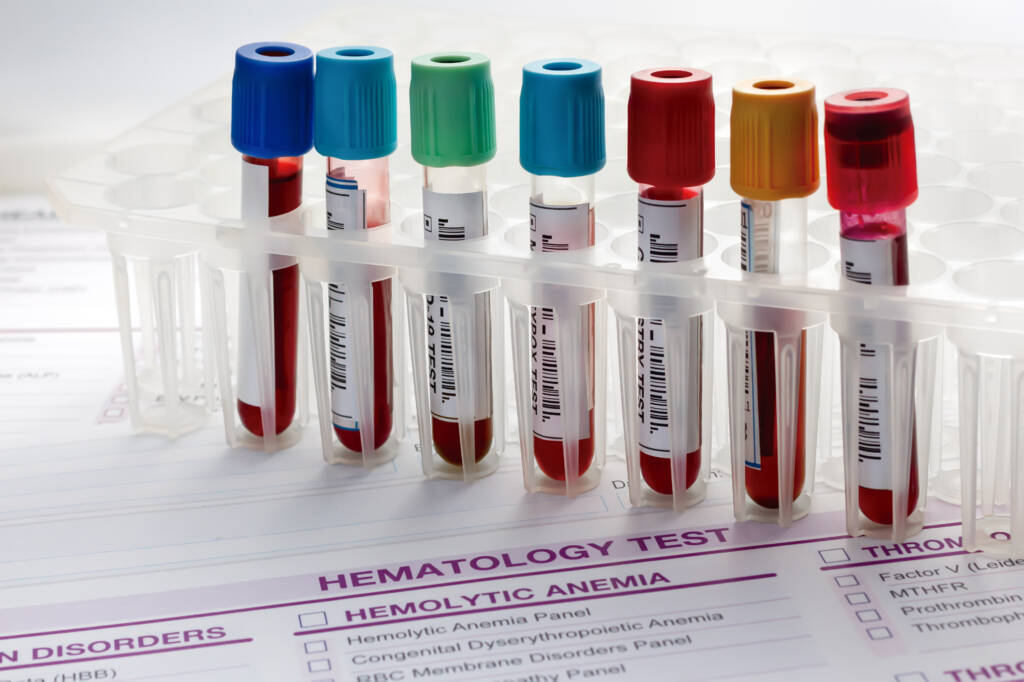
2 mL of serum collected in an SST tube. Allow the sample to clot upright for at least 30 minutes, then centrifuge within 2 hours of collection. Refrigerate promptly.
Note: Samples must be obtained prior to prostate procedures such as digital rectal exam (DRE), prostate massage, transrectal ultrasound (TRUS), or prostate biopsy.
ContainerType
Serum separator tube
Alternate Specimen Requirements
2 mL of serum collected in a plain red top tube. Allow the blood to clot upright for a minimum of 60 minutes, then centrifuge and transfer serum to a plastic transport tube within 2 hours of collection. Clearly label as serum from a plain red top tube. Keep refrigerated.
Note: Collect samples before prostate manipulations such as DRE, prostate massage, TRUS, or biopsy
Minimum Volume
Adult: 0.5 mL serum
Pediatric: 0.2 mL serum (does not allow for repeat or
additional testing).
Transport Temperature
Refrigerated
Expected Turnaround Time
1 day
Specimen Stability
1 day room temperature; 5 days refrigerated; 6 months frozen allow no more than 1 freeze/thaw cycle.
Methodology
Roche Electrochemiluminescence Immunoassay (ECLIA) with this method has been standardized against the stanford reference standard/WHO 96/670.
Overview
Prostate-specific antigen (PSA) is a glycoprotein enzyme produced almost exclusively by the epithelial cells of the prostate. It serves as a commonly used tumor marker to detect and monitor prostate adenocarcinoma. However, PSA levels can also rise in benign conditions like benign prostatic hyperplasia (BPH) and prostatitis. Conversely, PSA can be normal in some men with advanced prostate cancer.
When total PSA values fall between 4.0 and 10.0 ng/mL, clinical interpretation can be challenging. Measuring both total and free PSA can aid in distinguishing between benign and malignant causes. Age-specific reference ranges and the rate of PSA increase (PSA velocity) may also assist in clinical decision-making
Clinical Significance
The total PSA level is a readily available tumor marker used to:
- Screen for (although controversial) and support a diagnosis of prostate cancer
- Establish a baseline before starting cancer therapy; PSA levels generally correlate with extent of disease.
- Assess and monitor therapeutic response
- Monitor for disease recurrence
- Establish a baseline prior to initiating 5-alpha reductase inhibitor therapy for BPH
- Ratio of free PSA/Total PSA may be helpful in assessing prostate cancer risk in those patients within “gray zone” (4.0 to 10.0 ng/mL) PSA values.
- Ratio of free PSA/Total PSA and can aid in distinguishing between prostate cancer and BPH as a cause of elevated PSA.
Additional Information
The topic of prostate cancer screening and subsequent management remains controversial. The ideal age to begin screening and whether to use total PSA or PSA derivatives is not definitively settled, given the variable behavior of prostate cancers. Clinically, prostate cancer may range from indolent, localized disease to rapidly progressing metastatic cancer. Physicians must carefully weigh the benefits of early detection against the risks of overdiagnosis and overtreatment. Despite varying guidelines, it is generally agreed that screening decisions should be made collaboratively with an informed patient after discussing the potential risks and benefits.
Interpretative Information
- When total PSA concentration is <2.0 ng/mL, the probability of prostate cancer in asymptomatic men is low and further testing may not be necessary.
- When total PSA is >10.0 ng/mL, the probability of prostate cancer is high and further testing (biopsy) may be warranted.
- A lack of specificity is recognized between 4.0 to 10.0 ng/mL (gray zone) and measurement of free PSA to determine free:total ratio (or percent free PSA) helps determine relative risk of prostate cancer. Higher total PSA levels and lower percentage of free PSA are associated with higher risks of prostate cancer.
Limitations
- A normal PSA value does not rule out carcinoma; cancer of the prostate can be present with PSA levels under 4 ng/mL. Overweight men have been shown to have lower PSA values.
- PSA levels may fluctuate by as much as 25% and vary by methodology. When following patient values, it is important to use the same assay and consider interlaboratory inconsistencies. Values obtained with different assay methods cannot be used interchangeably.
- PSA is not specific for prostatic adenocarcinoma, but serum levels are fairly specific for prostatic tissue. Urethral and/or prostate infection or trauma (including cystoscopy and prostate biopsy) may elevate results; levels should be checked no earlier than 3 to 6 weeks after biopsy.
- PSA is not affected by dialysis but hemodialysis may alter free PSA. The latter should not be used to screen patients with renal failure.
- Finasteride or dutasteride (both used in treatment of BPH) may reduce PSA by ~50%, masking an elevated level (Freedland 2013).
References
American Urologic Association. PSA testing for the pretreatment staging and posttreatment management of prostate cancer: 2013 revision of 2009 best practice statement. 2013. Available at http://www.auanet.org/education/guidelines/prostate-specific-antigen.cfm. Accessed October 2, 2013.
Banez LL, Hamilton RJ, Partin AW et al. Obesity-related plasma hemodilution and PSA concentration among men with prostate cancer. JAMA. 2007;298(19):2275-2280.18029831
Barry MJ, “Prostate-Specific-Antigen Testing for Early Diagnosis of Prostate Cancer,” N Engl J Med, 2001, 344(18):1373-7.11333995
Bostwick DG, Grignon DJ, Hammond MEH, et al, “Prognostic Factors in Prostate Cancer: College of American Pathologists Consensus Statement 1999,” Arch Pathol Lab Med, 2000, 124(7):995-1000.10888774
Carter HB. Prostate cancers in men with low PSA levels–must we find them? N Engl J Med. 2004 May 27;350(22):2292-2294.15163780
Catalona WJ, Partin AW, Slawin KM, et al, “Use of the Percentage of Free Prostate-Specific Antigen to Enhance Differentiation of Prostate Cancer From Benign Prostatic Disease: A Prospective Multicenter Clinical Trial,” JAMA, 1998, 279(19):1542-7.9605898
Catalona WJ, Smith DS, Wolfert RL, et al, “Evaluation of Percentage of Free Serum Prostate Specific Antigen to Improve Specificity of Prostate Cancer Screening,” JAMA, 1995, 274(15):1214-20.7563511
Critz FA, Levinson AK, Williams WH, et al, “Prostate Specific Antigen Nadir Achieved by Men Apparently Cured of Prostate Cancer by Radiotherapy,” J Urol, 1999, 161(4):1199-203-5.10081869
Crook JM, Choan E, Perry GA, et al, “Serum Prostate-Specific Antigen Profile Following Radiotherapy for Prostate Cancer: Implications for Patterns of Failure and Definition of Cure,” Urology, 1998, 51(4):566-72.9586608
D’Amico AV, Schultz D, Loffredo M, et al, “Biochemical Outcome Following External Beam Radiation Therapy With or Without Androgen Suppression Therapy for Clinically Localized Prostate Cancer,” JAMA, 2000, 284(10):1280-3.10979115
Freedland S, Measurement of prostate specific antigen. UpToDate®, Basow DS, ed, Waltham, MA: UpToDate®, 2013. Available at http://www.uptodate.com Accessed October 2, 2013.
Jacobsen SJ, Klee GG, Lilja H, et al, “Stability of Serum Prostate-Specific Antigen Determination Across Laboratory, Assay, and Storage Time,” Urology, 1995, 45(3):447-53.7533456
Lindstedt G, Jacobsson A, Lundberg PA, et al, “Determination of Prostate-Specific Antigen in Serum by Immunoradiometric Assay,” Clin Chem, 1990, 36(1):53-8.1688745
Oesterling JE, Roy J, Agha A, et al, “Biologic Variability of Prostate-Specific Antigen and its Usefulness as a Marker for Prostate Cancer: Effects of Finasteride,” Finasteride PSA Study Group, Urology, 1998, 51(4A Suppl):58-63.9586598
Partin AW, Pearson JD, Landis PK, et al, “Evaluation of Serum Prostate-Specific Antigen Velocity After Radical Prostatectomy to Distinguish Local Recurrence From Distant Metastases,” Urology, 1994, 43(5):649-59.7513108
Pollack A, Zagars GK, and Kavadi VS, “Prostate Specific Antigen Doubling Time and Disease Relapse After Radiotherapy for Prostate Cancer,” Cancer, 1994, 74(2):670-8.7518341
Poteat HT, Ho GT, Lee ML, et al, “The Utility of Patient Age in Evaluating Prostate Cancer,” Am J Clin Pathol, 1997, 107(3):337-44.9052385
“Prostate Disease and PSA Testing,” Mayo Communique, Mayo Reference Service Publication, January, 2001.
Renshaw AA, Richie JP, Loughlin KR, et al, “Maximum Diameter of Prostatic Carcinoma Is a Simple, Inexpensive, and Independent Predictor of Prostate-Specific Antigen Failure in Radical Prostatectomy Specimens. Validation in a Cohort of 434 Patients,” Am J Clin Pathol, 1999, 111(5):641-4.10230354
Roehrborn CG, Boyle P, Gould AL, et al, “Serum Prostate-Specific Antigen as a Predictor of Prostate Volume in Men With Benign Prostatic Hyperplasia,” Urology, 1999, 53(3):581-9.10096388
Roehrborn CG, Gregory A, McConnell JD, et al, “Comparison of Three Assays for Total Serum Prostate-Specific Antigen and Percentage of Free Prostate-Specific Antigen in Predicting Prostate Histology,” Urology, 1996, 48(6A Suppl):23-32.8973696
Scher HI, “Management of Prostate Cancer After Prostatectomy: Treating the Patient, Not the PSA,” JAMA, 1999, 281(17):1642-5.10235160
Schifman RB, Ahmann FR, Elvick A, et al, “Analytical and Physiological Characteristics of Prostate-Specific Antigen and Prostatic Acid Phosphatase in Serum Compared,” Clin Chem, 1987, 33(11):2086-8.2445507
Slovacek KJ, Riggs MW, Spiekerman AM, et al, “Use of Age-Specific Normal Ranges for Serum Prostate-Specific Antigen,” Arch Pathol Lab Med, 1998, 122(4):330-2.9648900
Sokoll LJ and Chan DW, “Clinical Applications of the Molecular Forms of Prostate-Specific Antigen,” Diag Endo Metab, 1998, 16:133-48.
Wieder JA and Belldegrun AS, “The Utility of PSA Doubling Time to Monitor Prostate Cancer Recurrence,” Mayo Clin Proc, 2001, 76(6):571-2.11393493
Zietman AL, Shipley WU, and Willett CG, “Residual Disease After Radical Surgery or Radiation Therapy for Prostate Cancer. Clinical Significance and Therapeutic Implications,” Cancer, 1993, 71(3 Suppl):959-69.7679046
Alias
- Prostate specific antigen
Test Setup Days
Monday through Friday PM shift
CPT
84153 Limited Coverage Test For Medicare.
Advance Beneficiary Notice Of Non-Coverage (ABN) Required
If Diagnosis Is Not Covered.
LOINC: 2857-1
Reference Range
<=4.00 NG/ML
| UNIT CODE | UNIT CODE NAME | ANALYTE | GENDER | AGE | REFERENCE RANGE | Units of Measure |
|---|---|---|---|---|---|---|
| 2606 | PSA | PSA | NOT SPECIFIED | ALL | <=4.00 | NG/ML |
| 2606 | PSA | PSA | MALE | ALL | <=4.00 | NG/ML |
| 2606 | PSA | PSA | FEMALE | ALL | <=4.00 | NG/ML |