
Order Code
4272
Preferred Specimen
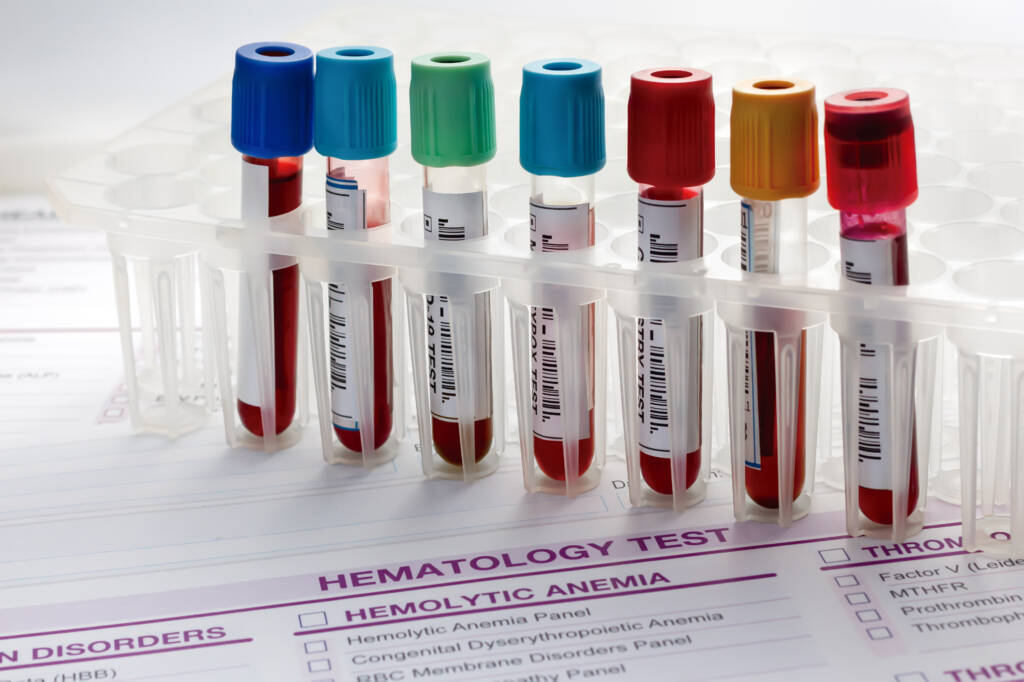
Collect 7 mL of whole blood in an EDTA tube. Store refrigerated.
Note: The ideal collection time is immediately prior to the next scheduled dose (trough level). If this timing is not feasible, patients should not alter their dosing schedule without medical guidance. While consensus guidelines acknowledge that a definitive therapeutic range is not well-established, early post-transplant target trough concentrations typically fall between 5–20 ng/mL.
Important: Do not collect specimens from patients receiving high doses of biotin (>5 mg/day) until at least 8 hours have passed since the last dose.
ContainerType
EDTA (lavender top) tube
Minimum Volume
3 mL whole blood
Transport Temperature
Refrigerated
Expected Turnaround Time
1 day
Specimen Stability
5 days room temp; 7 days refrigerated; 3 months frozen
Methodology
Roche COBAS Electrochemiluminescence Immunoassay (ECLIA).
Rejection Criteria
- Samples from patients taking biotin
avoid freeze thaw cycles
Overview
Tacrolimus is a macrolide antibiotic derived from Streptomyces tsukubaensis and is a potent immunosuppressive agent. It is commonly used to prevent graft rejection in kidney, liver, heart, lung, bone marrow, and intestinal transplants. Due to its narrow therapeutic index and potential for dose-dependent toxicity and adverse reactions, routine therapeutic drug monitoring is advised.
Clinical Significance
Monitor the adequacy of drug dosage levels in management of immunosuppression for organ transplant recipients, including:
- Dose optimization
- Investigation of failure to respond
- Investigation of adverse reactions and toxicity
- Monitor with changes in concomitant medications
Additional Information
Tacrolimus exhibits highly variable absorption, with reported oral bioavailability ranging from 5% to 67%. It binds extensively to plasma proteins (~99%), primarily albumin and alpha-1-acid glycoprotein, and demonstrates significant erythrocyte association. Distribution between plasma and whole blood is influenced by multiple variables, including hematocrit, drug concentration, temperature at plasma separation, concurrent medications, and plasma protein levels.
Renal toxicity, potentially progressing to renal failure, remains the most serious adverse effect, mirroring the nephrotoxicity profile of cyclosporine. Therefore, kidney function tests—such as BUN and creatinine clearance—should be performed alongside tacrolimus levels, as toxicity can occur even at therapeutic concentrations. Concurrent use with cyclosporine should be avoided to minimize nephrotoxic risk; a washout period of at least 24 hours is recommended when transitioning between the two drugs. Other common adverse effects include neurotoxicity and hypertension.
Tacrolimus undergoes extensive hepatic metabolism via the cytochrome P450 system, predominantly CYP3A enzymes. Numerous drug interactions may alter tacrolimus levels by affecting this metabolic pathway.
Drug Interactions
Agents That May Increase Tacrolimus Levels/Effects:
- 5-Aminosalicylic Acid Derivatives
- Abametapir
- Alcohol (Ethyl)
- Aluminum Hydroxide
- Aminoglycosides
- Amiodarone
- Angiotensin II Receptor Blockers
- ACE Inhibitors
- Asciminib
- Azithromycin (Systemic)
- Calcium Channel Blockers (Dihydropyridines)
- Cannabidiol, Cannabis
- Chloramphenicol (Systemic & Ophthalmic)
- Cladribine
- Clofazimine
- Clotrimazole (Oral & Topical)
- Cyclosporine (Systemic)
- CYP3A4 Inhibitors (Strong, Moderate, Weak)
- Danazol
- Dipyrone
- Direct-Acting Antivirals (for HCV)
- Dronedarone
- Efonidipine
- Eplerenone
- Erdafitinib
- Ertapenem
- Erythromycin (Systemic)
- Estrogen Derivatives
- Fexinidazole
- Fluconazole
- Foscarnet
- Fusidic Acid (Systemic)
- Grapefruit Juice
- PPIs and PCABs (Proton Pump Inhibitors)
- Itraconazole
- Ketoconazole (Systemic)
- Lasmiditan
- Levofloxacin (Systemic)
- Magnesium Hydroxide
- Maribavir
- Metoclopramide
- Nelfinavir
- NSAIDs (Systemic and Topical)
- Ombitasvir, Paritaprevir, Ritonavir ± Dasabuvir
- P-gp/ABCB1 Inhibitors
- Posaconazole
- Potassium-Sparing Diuretics
- Promazine
- Protease Inhibitors
- Ritonavir
- Saquinavir
- Schisandra
- Sirolimus Products
- Solriamfetol
- S1P Receptor Modulators
- Spironolactone
- Temsirolimus
- Tigecycline
- Tofisopam
- Treosulfan
- Live Vaccines
- Voriconazole
Agents That May Decrease Tacrolimus Levels/Effects:
- Aluminum Hydroxide
- Cinacalcet
- Corticosteroids (Systemic)
- CYP3A4 Inducers (Strong, Moderate, Weak)
- Direct-Acting Antivirals (for HCV)
- Echinacea
- Erdafitinib
- Everolimus
- Flucloxacillin
- Ivosidenib
- Magnesium Hydroxide
- Sevelamer
- Simeprevir
- Sirolimus Products
- Sofosbuvir
- St. John’s Wort
- Temsirolimus
- Live Vaccines
Limitations
Results from different methodologies cannot be used interchangeably (eg, immunoassay versus LC/MS/MS)
References
Armstrong VW and Oellerich M, “New Developments in the Immunosuppressive Drug Monitoring of Cyclosporine, Tacrolimus, and Azathioprine,” Clin Biochem, 2001, 34(1):9-16.11239509
Busuttil RW and Holt CD, “Tacrolimus Is Superior to Cyclosporine in Liver Transplantation,” Transplant Proc, 1998, 30(5):2174-8.9723432
Colm CM. Pharmacology and side effects of cyclosporine and tacrolimus. In: Post TW. ed. UpToDate. Waltham, MA: UpToDate; 2014. http://www.uptodate.com. Accessed October 31, 2014.
de Mattos AM, Olyaei AJ, and Bennett WM, “Nephrotoxicity of Immunosuppressive Drugs: Long-Term Consequences and Challenges for the Future,” Am J Kidney Dis, 2000, 35(2):333-46. 10676738
Gummert JF, Ikonen T, and Morris RE, “Newer Immunosuppressive Drugs: A Review,” J Am Soc Nephrol, 1999, 10(6):1366-80.10361877
Linder MW and Elin RJ, “Implications of Methodologic Bias for Therapeutic Drug Monitoring,” Arch Pathol Lab Med, 1999, 123(10):931-2.10506447
Oellerich M, Armstrong VW, Schutz E, et al, “Therapeutic Drug Monitoring of Cyclosporine and Tacrolimus. Update on Lake Louise Consensus Conference on Cyclosporine and Tacrolimus,” Clin Biochem, 1998, 31(5):309-16.9721427
Shapiro R, “Tacrolimus in Pediatric Renal Transplantation: A Review,” Pediatr Transplant, 1998, 2(4):270-6.10084728
Spencer CM, Goa KL, and Gillis JC, “Tacrolimus. An Update of its Pharmacology and Clinical Efficacy in the Management of Organ Transplantation,” Drugs, 1997, 54(6):925-75.9421697
Tacrolimus (Systemic). Lexi-Drugs. UpToDate Lexidrug. Waltham, MA: UpToDate Inc. https://online.lexi.com. Accessed August 19, 2021.
Trull AK, “Therapeutic Monitoring of Tacrolimus,” Ann Clin Biochem, 1998, 35(Pt 2):167-80. 9547889
Undre NA, Stevenson P, and Schafer A, “Pharmacokinetics of Tacrolimus: Clinically Relevant Aspects,” Transplant, 1999, 31(7A):21S-24S.10576037
Young DS, Effects of Drugs on Clinical Laboratory Tests, 5th ed, Volume 1: Listing by Test, Washington, DC: AACC Press, American Association of Clinical Chemistry, 2000, Section 3, 734-6.
Alias
- Fk-506
- Prograf
Test Setup Days
Monday through Friday AM shift
CPT
80197 LOINC: 74096-9
Reference Range
5-20 NG/ML
| UNIT CODE | UNIT CODE NAME | ANALYTE | GENDER | AGE | REFERENCE RANGE | Units of Measure |
|---|---|---|---|---|---|---|
| 4272 | PROGRAF FK-506 | PROGR | NOT SPECIFIED | ALL | 5.0-20.0 | NG/ML |
| 4272 | PROGRAF FK-506 | PROGR | MALE | ALL | 5.0-20.0 | NG/ML |
| 4272 | PROGRAF FK-506 | PROGR | FEMALE | ALL | 5.0-20.0 | NG/ML |