
Order Code
4610
Preferred Specimen
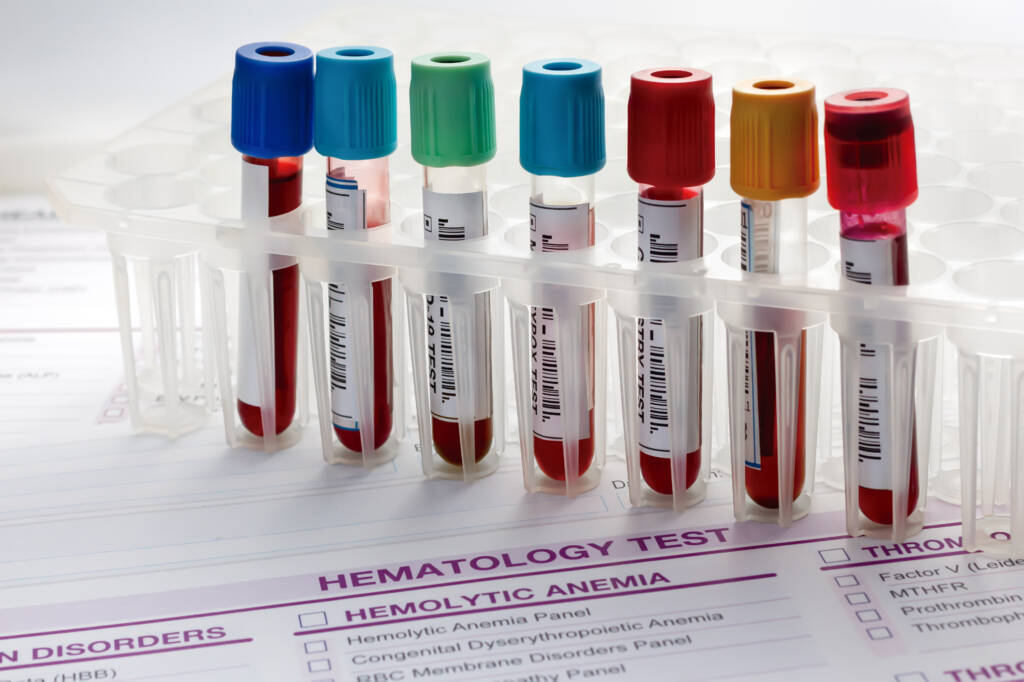
Collect 1 mL of serum using an SST tube. Allow the sample to clot upright for a minimum of 30 minutes, then centrifuge within 2 hours of collection. Store refrigerated.
Note: For patients on high-dose biotin therapy (>5 mg/day), avoid sample collection until at least 8 hours after the last biotin dose.
ContainerType
Serum separator tube
Minimum Volume
1 mL
Transport Temperature
Refrigerated
Specimen Stability
thyroglobulin AB:
4 days room temperature; 7 days refrigerated;
2 months frozen
thyroid peroxidase AB:
8 days room temperature; 8 days refrigerated;
6 months frozen
Methodology
Roche Electrochemiluminescence Immunoassay (ECLIA)
Rejection Criteria
- Hemolysis
lipemia
more than one freeze/thaw cycle
Overview
Assessment and monitoring of thyroid disorders often involve measuring specific thyroid autoantibodies. These tests detect antibodies that disrupt thyroid hormone synthesis or interfere with its regulatory feedback. Autoimmune thyroid diseases include a range of conditions, from Graves disease (causing hyperthyroidism) to Hashimoto thyroiditis (leading to hypothyroidism).
- TPO-Ab: Autoantibodies targeting thyroperoxidase (TPO), an enzyme integral to converting T4 into the active hormone T3. Previously called antimicrosomal antibodies, TPO-Ab is the most sensitive and frequently used marker for autoimmune thyroid disease (Mayo [TPO-Ab 2015]).
- TgAb: Autoantibodies against thyroglobulin (Tg), a glycoprotein uniquely produced by thyroid follicular cells containing iodinated tyrosines essential for thyroid hormone production. Thyroglobulin is typically detected in blood only when there is thyroid cell damage (e.g., thyroiditis, malignancy). TgAb testing is often reserved for cases where TPO-Ab is negative but autoimmune disease is still suspected. It also helps assess the reliability of thyroglobulin measurements in patients treated for differentiated thyroid cancers.
While once thought to cause thyroid tissue damage, TPO-Ab and TgAb are now regarded as disease markers without evidence of direct pathogenic action (Mayo [TgAb 2015]). Thyroid autoantibody testing is not part of routine thyroid function screening (such as TSH, T4, T3), but is typically ordered when clinical signs suggest thyroid dysfunction or an autoimmune cause of goiter is suspected.
Clinical Significance
- Part of evaluation to distinguish an autoimmune etiology for hyperthyroidism (eg, Graves disease) or hypothyroidism (eg, Hashimoto thyroiditis) from nonautoimmune causes (eg, toxic nodular goiter, postpartum thyroiditis, factitious thyrotoxicosis)
- Predict likelihood of progression from subclinical disease to clinical hypothyroidism or hyperthyroidism
- Aid in the treatment decision of subclinical hypothyroidism or hyperthyroidism
- Evaluate for an autoimmune cause of recurrent miscarriages
- TPO-Ab:
- Primary test for Hashimoto thyroiditis
- Secondary test for Graves disease
- Predict possible fetal/newborn thyroid dysfunction in mothers with Graves disease
- Associated with thyroid dysfunction due to interferon alpha, interleukin-2, lithium (hypothyroidism), and amiodarone (hyper- or hypothyroidism)
- TgAb:
- Diagnose autoimmune thyroid disease when TPO-Ab measurements are negative despite high clinical suspicion for autoimmune thyroid disease (eg, presence of goiter in an iodine-deficient region where presence of TgAb may help distinguish autoimmune thyroid disease from iodine deficiency)
- Indicated in differentiated thyroid carcinoma (DTC) prior to drawing thyroglobulin levels to monitor disease status after treatment; presence of TgAb may interfere with serum thyroglobulin measurements causing falsely high or falsely low levels depending on methodology
- Not indicated for routine screening or as part of the initial evaluation of thyroid dysfunction
Additional Information
Thyroid hormone production is regulated through a feedback loop involving the hypothalamus, pituitary gland, and thyroid. Low levels of T3 and T4 stimulate hypothalamic release of thyrotropin-releasing hormone, increasing pituitary secretion of thyroid-stimulating hormone (TSH), which in turn promotes thyroid hormone synthesis. High T3 and T4 levels suppress this axis. Disruption by thyroid autoantibodies can lead to autoimmune thyroiditis.
Most chronic thyroiditis cases are autoimmune. Graves disease, which causes hyperthyroidism, occurs in about 14 per 100,000 people, most commonly between ages 40 and 60, and is five times more frequent in women. Hashimoto thyroiditis, causing hypothyroidism, affects about 1 in 1,000 individuals, usually diagnosed between 40 and 50 years of age, and is eight times more common in females (AACE [Bahn 2011]; AACE [Garber 2012]).
TPO antibodies are detected in 50–90% of Hashimoto thyroiditis cases and are considered diagnostic; TgAb is present in 30–50%. In Graves disease, these antibodies are found in approximately half as many patients. Notably, thyrotropin receptor antibodies (TRAb) are more sensitive and preferred for diagnosing Graves disease (Mayo [TPO-Ab 2015]; Mayo [TgAb 2015]).
Interpretative Information
TPO-Ab elevation may be seen in:
- Hashimoto thyroiditis
- Graves disease
- Postpartum thyroiditis
- Collagen vascular diseases (eg. rheumatoid arthritis, scleroderma, Sjögren syndrome)
- Autoimmune disorders (pernicious anemia, systemic lupus erythematosus, rheumatoid arthritis)
TgAb elevation may be seen in:
Chronic urticaria
Hashimoto thyroiditis
Graves disease
Differentiated thyroid cancer (follicular thyroid carcinoma, papillary thyroid carcinoma)
Diabetes type 1
Pregnancy
Collagen vascular disorders (eg, rheumatoid arthritis, scleroderma, Sjögren syndrome)
Autoimmune disorders (pernicious anemia, systemic lupus erythematosus, rheumatoid arthritis)
Limitations
- False positive TPO-Ab and TgAb may be seen in up to 10% of healthy people and are more common in females and with increasing age (Cardona 2015; Mayo [TPO Ab 2015]).
- Results of TPO-Ab and TgAb assays from different methodologies are not comparable; results to evaluate disease progression/regression over time are best performed at the same laboratory using the same methodology.
- Results may be invalid in sera from patients with myeloma and IgG levels greater than 4 g/L.
- Serum TgAb measurements must be interpreted with caution in the presence of known differentiated thyroid cancer where TgAb may be formed against thyroglobulin associated with malignancy.
References
Bahn RS, Burch HB, Cooper DS, et al. Hyperthyroidism and other causes of thyrotoxicosis: management guidelines of the American Thyroid Association and American Association of Clinical Endocrinologists. Endocr Pract. 2011;17(3):456-520.21700562
Cardona R. Antithyroglobulin. Medscape website. http://emedicine.medscape.com/article/2086797-overview. Updated November 24, 2015. Accessed December 10, 2015.
Caturegli P, De Remigis A, Rose NR. Hashimoto thyroiditis: clinical and diagnostic criteria. Autoimmun Rev. 2014;13(4-5):391-397.24434360
Elhomsy G. Antithyroid antibody. Medscape website. http://emedicine.medscape.com/article/2086819-overview. Updated December 4, 2014. Accessed December 10, 2015.
Galarza JB. Thyroid function tests. In: Farwell A, ed. Clinical Thyroidology for the Public. Falls Church, VA: American Thyroid Association; 2018:11(12):3-4. https://www.thyroid.org/wp-content/uploads/publications/ctfp/volume11/issue12/ct_public_v1112_3_4.pdf. Accessed July 22, 2020.
Galofre JC, Davies TF. Autoimmune thyroid disease in pregnancy: a review. J Womens Health (Larchmt). 2009;18(11):1847-1856.19951221
Garber JR, Cobin RH, Gharib H, et al. Clinical practice guidelines for hypothyroidism in adults: cosponsored by the American Association of Clinical Endocrinologists and the American Thyroid Association. Thyroid. 2012;22(12):1200-1235.22954017
Haddow JE, Palomaki GE, Allan WC, et al. Maternal thyroid deficiency during pregnancy and subsequent neuropsychological development of the child. N Engl J Med. 1999;341(8):549-555.10451459
Haugen BR, Alexander EK, Bible KC, et al. 2015 American Thyroid Association Management Guidelines for Adult Patients with Thyroid Nodules and Differentiated Thyroid Cancer [published online October 14, 2015]. Thyroid.26462967
Hutfless S, Matos P, Talor MV, Caturegli P, Rose NR. Significance of prediagnostic thyroid antibodies in women with autoimmune thyroid disease. J Clin Endocrinol Metab. 2011;96(9):E1466-1471.21715532
Jevalikar G, Solis J, Zacharin M. Long-term outcomes of pediatric Graves’ disease. J Pediatr Endocrinol Metab. 2014;27(11-12):1131-1136.24945422
Luong JHT, Vashist SK. Chemistry of Biotin-Streptavidin and the Growing Concern of an Emerging Biotin Interference in Clinical Immunoassays. ACS Omega. 2019;5(1):10-18.31956746
Spencer CA. Assay of thyroid hormones and related substances. In: De Groot LJ, Beck-Peccoz P, Chrousos G, et al, eds. Endotext [Internet]. South Dartmouth, MA: MDText.com, Inc.; 2000-2016. http://www.ncbi.nlm.nih.gov/books/NBK279113. Updated January 1, 2013. Accessed January 7, 2016.25905337
Sweeney LB, Stewart C, Gaitonde DY. Thyroiditis: an integrated approach. Am Fam Physician. 2014;90(6):389-396.25251231
Thyroglobulin Antibody, Serum. Mayo Medical Laboratories website. http://www.mayomedicallaboratories.com/test-catalog/Clinical+and+Interpretive/84382. Accessed December 10, 2015.
Thyroperoxidase (TPO) Antibodies, Serum. Mayo Medical Laboratories website. http://www.mayomedicallaboratories.com/test-catalog/Clinical+and+Interpretive/81765. Accessed December 10, 2015.
Walsh JP, Bremner AP, Feddema P, Leedman PJ, Brown SJ, O’Leary P. Thyrotropin and thyroid antibodies as predictors of hypothyroidism: a 13-year, longitudinal study of a community-based cohort using current immunoassay techniques. J Clin Endocrinol Metab. 2010;95(3):1095-1104.20097710
Weetman AP. Graves’ disease. N Engl J Med. 2000;343(17):1236-1248.11071676
Weetman AP, DeGroot LJ. Autoimmunity to the Thyroid Gland. In: De Groot LJ, Beck-Peccoz P, Chrousos G, et al, eds. Endotext [Internet]. South Dartmouth, MA: MDText.com, Inc.; 2000-2016. http://www.ncbi.nlm.nih.gov/books/NBK285552/. Updated January 19, 2015. Accessed January 7, 2016.25905407
Zhang Y, Wang R, Dong Y, Huang G, Ji B, Wang Q. Assessment of biotin interference in thyroid function tests. Medicine (Baltimore). 2020;99(9):e19232. doi:10.1097/MD.000000000001923232118725
Diagnostic Role
Thyroid autoantibody testing with TPO-Ab and TgAb is most commonly performed after other thyroid tests (TSH, free or total T4, free or total T3) indicate thyroid dysfunction, and then, only where autoimmune thyroiditis is suspected.
The presence of thyroid autoantibodies suggests active autoimmune thyroid disease (eg, Hashimoto thyroiditis, Graves disease), especially high or rising titer levels. However, while the presence of TPO-Ab and TgAb commonly differentiates thyroid autoimmune disorders from nonautoimmune goiter or thyroid dysfunction, interpretation must take into consideration that mild to moderately elevated TPO-Ab and TgAb levels may also be present in other autoimmune dysfunction (eg, collagen vascular diseases, diabetes type 1). Autoantibodies may also be present without any apparent thyroid dysfunction, most commonly in women and the elderly; these patients need to be followed over time for the development of thyroid disease, which may present even years later.
Pregnancy poses a unique risk in that maternal thyroid autoantibodies can cross the placenta and increase the risk of hypo- or hyperthyroidism in the developing fetus or newborn. Universal maternal screening is not indicated, however women considered at risk should be screened with a TSH level, and if abnormal, further testing with thyroid antibodies (especially TPO-Ab) may be indicated. Risk factors include symptoms of a thyroid disorder, personal or family history of thyroid disease, known diabetes or other autoimmune disorder, prior head and neck irradiation, or a history of infertility or miscarriage (AACE [Garber 2012]).
It should be noted, however, that routine measurement of thyroid autoantibodies adds little to the evaluation of clinically-obvious primary hypothyroidism which is most commonly caused by chronic autoimmune thyroiditis. Measurement (especially TPO-Ab) is useful where the diagnosis is not obvious, or when assessing the risk for progression of subclinical disease to frank hypothyroidism (Mayo [TPO Ab 2015]).
Test Setup Days
Monday through Friday
CPT
86800, 86376