
Order Code
4936
Preferred Specimen
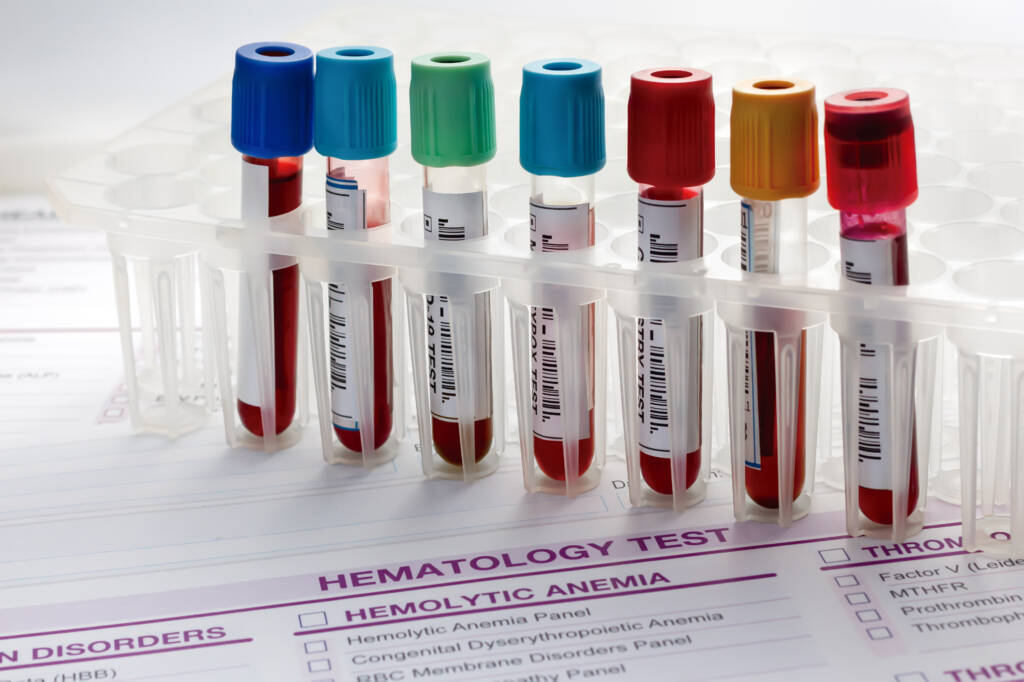
Collect 2 mL of serum using an SST tube. Allow the sample to clot upright for at least 30 minutes, then centrifuge within 2 hours of collection. Keep refrigerated.
ContainerType
Serum separator tube
Minimum Volume
0.5 mL serum
Transport Temperature
Refrigerated
Expected Turnaround Time
1-3 days
Specimen Stability
8 days room temperature ; 8 days refrigerated; 6 months frozen
Methodology
Roche COBAS immunoturbidimetric
Rejection Criteria
- Gross hemolysis
Overview
Transferrin (Tf) is an 80 kDa glycoprotein primarily produced by the liver, though it can be synthesized by other tissues as well. Its main role is to transport iron through the bloodstream, delivering most of it to the bone marrow for red blood cell production, while the remainder is stored in body tissues. Transferrin accounts for approximately 70% of the plasma’s iron-binding capacity, with about one-third of its iron-binding sites normally occupied, a value known as transferrin saturation (TS). Although transferrin is not the only iron-binding protein in circulation, it is the predominant one, making its concentration closely correlate with total iron-binding capacity (TIBC).
In clinical practice, both transferrin or TIBC and transferrin saturation are used to evaluate iron status, including conditions of iron deficiency and iron overload (such as hereditary hemochromatosis). Transferrin is typically measured directly by immunochemical methods like turbidimetry or nephelometry. TIBC can be determined either indirectly—by adding unsaturated iron-binding capacity (UIBC) to serum iron—or directly, by saturating serum proteins with iron and measuring the bound iron. Transferrin saturation is calculated as the ratio of serum iron to transferrin (or TIBC), expressed as Iron ÷ Transferrin (or TIBC) × 100.
Clinical Significance
- Support a diagnosis of iron deficiency
- Due to inadequate intake, malabsorption, or altered metabolism
- Due to blood loss
- Support a diagnosis of iron overload
- Primary: Hereditary hemochromatosis (HH) where overload is caused by increased gastrointestinal iron absorption (erythropoiesis is normal); excessive iron is deposited in the liver and other organs causing fibrosis if untreated
- Secondary: Hemosiderosis where iron overload is caused by a variety of conditions including anemias due to ineffective erythropoiesis (eg, thalassemias), repeated blood transfusion, excessive parenteral or oral replacement, etc
- Used to calculate transferrin saturation (TS) to aid in distinguishing iron deficiency from chronic disease when the serum iron is low (transferrin saturation)
- Aid in diagnosis of iron toxicity (child overdose via vitamin ingestion)
- Cost-effective approach in the investigation of possible iron deficiency
- Nutritional well-being; levels are decreased in severe malnutrition; unreliable in assessment of mild malnutrition; does not accurately measure nutritional repletion
Interpretative Information
Transferrin levels rise in iron deficiency and decrease in iron overload states. Levels may also be elevated in late pregnancy and in women taking oral contraceptives. Conversely, transferrin decreases in protein-losing conditions such as nephrotic syndrome, chronic kidney disease, severe burns, malnutrition, and advanced liver disease. As a negative acute-phase reactant, transferrin is also reduced during inflammation or severe illness.
A transferrin saturation below 18–20% suggests insufficient iron availability for hemoglobin synthesis and red blood cell production. Values below 15% strongly indicate iron deficiency but should be confirmed with additional tests.
References
Auerbach M, Adamson JW. How we diagnose and treat iron deficiency anemia. Am J Hematol. 2016 Jan;91(1):31-38.26408108
Baker HM, Anderson BF, Baker EN. Dealing with iron: common structural principles in proteins that transport iron and heme. Proc Natl Acad Sci U S A. 2003;100(7):3579-3583.12642662
Elsayed ME, Sharif MU, Stack AG. Transferrin saturation: A body iron biomarker. In: Makowski G, ed. Advances in Clinical Chemistry. New York, NY: Elsevier Inc.; 2016:71-97.
Fuhrman MP, Charney P, Mueller CM. Hepatic proteins and nutrition assessment. J Am Diet Assoc. 2004 Aug;104(8):1258-1264.15281044
Szöke D, Panteghini M. Diagnostic value of transferrin. Clin Chim Acta. 2012 Aug 16;413(15-16):1184-1189.
Transferrin
. Brea, CA: Beckman Coulter; August 2009.Diagnostic Role
| Disease | Ferritin | Transferrin / TIBC | Serum Iron | Iron Saturation |
|---|---|---|---|---|
| Uncomplicated iron deficiency | ↓ | ↑ | ↓ | N/↓ |
| Anemia of chronic disease | N/↑ | N/↓ | ↓ | N/↓ |
| Sideroblastic anemias | ↑ | N/↓ | N/↑ | ↑ |
| Hemolytic anemias | ↑ | N/↓ | ↑ | ↑ |
| Hemochromatosis | ↑ | Slight ↓ | ↑ | ↑↑ |
| Protein depletion | – | N/↓ | N/↓ | N/↓ |
| Acute liver disease | ↑ | Var | ↑ | ↑ |
| ↑ = increase; ↓ = decrease; N = normal; Var = variable. | ||||
Uncomplicated iron deficiency: Serum transferrin (and TIBC) high, serum iron low, saturation low. Usual causes of depleted iron stores are due to blood loss and inadequate dietary iron. RBCs in moderately severe iron deficiency are hypochromic and microcytic. The red cell distribution width increases and MCV decreases. Stainable marrow iron is absent. Serum ferritin decrease is the earliest indicator of iron deficiency if inflammation is absent.
Anemia of chronic disease: Serum transferrin (and TIBC) low to normal, serum iron low, saturation low or normal, ferritin increased. Transferrin decreases with many inflammatory diseases. With chronic disease there is a block in movement to and utilization of iron by marrow. This leads to low serum iron and decreased erythropoiesis. Examples include acute and chronic infections, malignancy, and renal failure.
Sideroblastic anemia: Serum transferrin (and TIBC) normal to low, serum iron normal to high, saturation high.
Hemolytic anemias: Serum transferrin (and TIBC) normal to low, serum iron high, saturation high.
Hemochromatosis: Serum transferrin (and TIBC) slightly low, serum iron high, saturation very high. Genetic tests for detecting hemochromatosis mutations (C282Y and H63D) are available. Homozygosity for C282Y mutation is responsible for up to 90% of hemochromatosis patients; see HFE Gene, Whole Blood.
Protein depletion: Serum transferrin (and TIBC) may be low, serum iron normal or low (if patient also is iron deficient). This may occur as a result of malnutrition, liver disease, renal disease (eg, nephrosis), or other entities.
Liver disease: Serum transferrin variable; with acute viral hepatitis, high along with serum iron and ferritin. With chronic liver disease (eg, cirrhosis), transferrin may be low. Patients who have cirrhosis and portacaval shunting have saturated TIBC/transferrin as well as high ferritin.
Test Setup Days
Monday through Friday PM shift
CPT
84466 Limited Coverage Test For Medicare.
Advance Beneficiary Notice Of Non-Coverage (ABN) Always
Required For Frequency.
Note: If Transferrin Is Measured, It Is Not Considered
Appropriate To Measure Unsaturated Iron Binding Capacity.
Payment For Iron Binding Capacity Will Be Denied If Ordered
On The Same Date Of Service As Measured Transferrin.
LOINC: 3034-6
Reference Range
200-360 MG/DL
| UNIT CODE | UNIT CODE NAME | ANALYTE | GENDER | AGE | REFERENCE RANGE | Units of Measure |
|---|---|---|---|---|---|---|
| 4936 | TRANSFERRIN | TRANSF | NOT SPECIFIED | ALL | 200-360 | MG/DL |
| 4936 | TRANSFERRIN | TRANSF | MALE | ALL | 200-360 | MG/DL |
| 4936 | TRANSFERRIN | TRANSF | FEMALE | ALL | 200-360 | MG/DL |