
Order Code
2233
Preferred Specimen
Volume: 2 mL of serum
Collection Instructions:
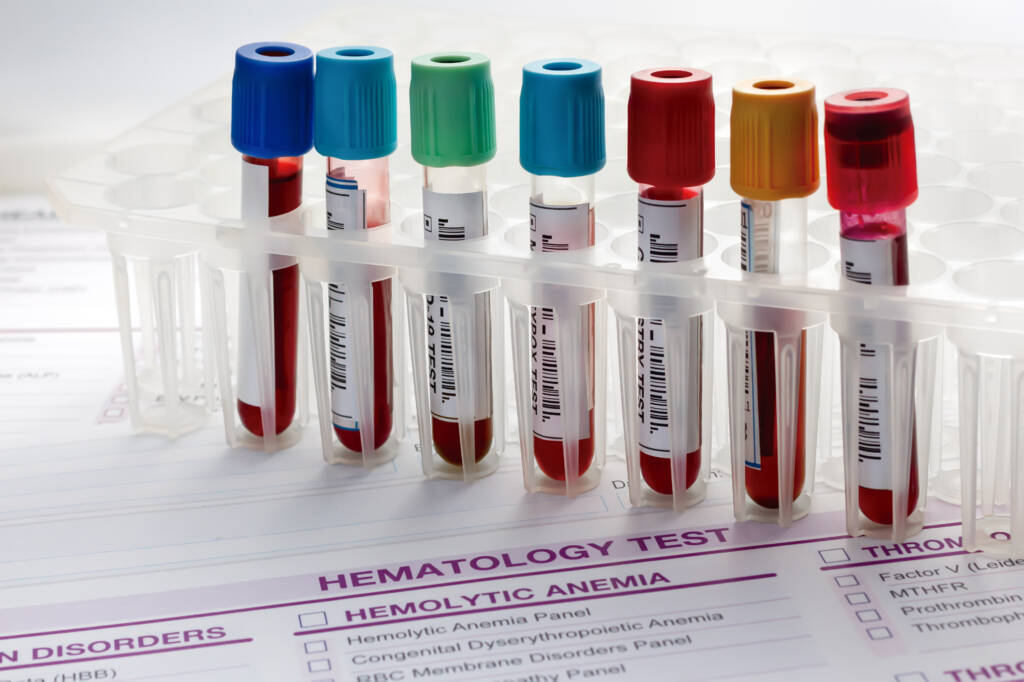
- Collect in a Serum Separator Tube (SST).
- Allow sample to clot upright for at least 30 minutes.
- Centrifuge within 2 hours of collection.
- Store refrigerated.
ContainerType
Serum separator tube
Alternate Specimen Requirements
Volume: 2 mL of serum
Collection Instructions:
- Use a plain red top tube (no gel).
- Allow sample to clot upright for at least 60 minutes.
- Centrifuge and transfer serum to a plastic transport tube within 2 hours.
- Clearly label as: “Serum from plain red top tube.”
- Store refrigerated.
Minimum Volume
Adult: 1 mL serum
Pediatric: 0.2 mL serum (does not allow for repeat or
additional testing).
Transport Temperature
Refrigerated
Specimen Stability
5 days room temperature; 1 week refrigerated; 6 months frozen
Methodology
Roche COBAS enzymatic colorimetric (uricase) Note: STAT or regional laboratory testing may use different methodology and/or manufacturer
Rejection Criteria
- Gross hemolysis
Overview
Uric acid is an organic acid produced primarily in the liver as the end product of purine metabolism, which derives from both endogenous nucleic acid breakdown and dietary sources. Approximately:
- 75% is excreted via the kidneys
- 25% is metabolized by gut bacteria
Serum uric acid levels are influenced by:
- Rate of hepatic production (purine degradation)
- Renal excretion efficiency
- Combined metabolic and renal factors
When levels exceed the solubility limit (~6.8 mg/dL), uric acid may precipitate and form crystals, leading to:
- Acute or chronic urate nephropathy
- Gout
- Nephrolithiasis (kidney stones)
Clinical Significance
- Evaluation and monitoring of gout, especially with monoarticular joint pain (often first MTP joint)
- Assessment of renal stones
- Aid in diagnosis and monitoring of renal failure or chronic kidney disease
- Monitor patients undergoing chemotherapy or radiation (tumor lysis syndrome)
- Evaluate disorders with high nucleic acid turnover (e.g., leukemia, lymphoma, polycythemia vera)
Additional Information
- Hyperuricemia is strongly linked with:
- Hypertension
- Metabolic syndrome
- Type 2 diabetes
- Increased cardiovascular risk, including stroke and myocardial infarction (MI)
- Asymptomatic hyperuricemia is common and may not always require treatment, but may still indicate elevated risk for chronic conditions.
Renal Manifestations of Hyperuricemia:
- Uric Acid Nephrolithiasis:
- 5–10% of all U.S. kidney stones
- Triggered by low urine pH (<5–5.5)
- Acute Uric Acid Nephropathy (UAN):
- Rapid renal failure from urate crystal deposition
- Often follows chemotherapy or tumor lysis
- Chronic Urate Nephropathy:
- Progressive renal failure
- Requires biopsy for definitive diagnosis
Interpretative Information
Increased Uric Acid (Hyperuricemia)
Due to Decreased Excretion (85–90% of cases)
- Chronic kidney disease
- Pre-eclampsia, eclampsia
- Lead toxicity (saturnine gout)
- Dehydration (prerenal azotemia)
- Genetic disorders (e.g., familial juvenile gouty nephropathy)
- Acidosis (lactic, diabetic, alcoholic, starvation)
- Hypothyroidism
- Hypertension
- Metabolic syndrome
Due to Increased Production
- High dietary purine intake
- Increased purine synthesis (inherited or idiopathic)
- Hematologic malignancies (e.g., leukemia, lymphoma)
- Cytotoxic therapy
- Genetic conditions:
- Lesch-Nyhan syndrome
- Kelley-Seegmiller syndrome
- Hemolytic and myeloproliferative disorders
Combined Mechanisms
- Alcohol use
- Excessive exercise
- High-fructose intake (especially soft drinks)
- Inherited metabolic disorders (e.g., aldolase B deficiency, G6Pase deficiency)
Drug-Induced Elevation
Numerous medications can elevate serum uric acid via metabolic or renal mechanisms. These include but are not limited to:
- Diuretics: furosemide, thiazides
- Cytotoxic agents: methotrexate, mercaptopurine
- Low-dose aspirin
- Immunosuppressants: cyclosporine
- Antibiotics: ethambutol
- Others: niacin, levodopa, propranolol, etc.
Decreased Uric Acid (Hypouricemia)
Due to Decreased Production
- Xanthine oxidase deficiency (congenital or allopurinol-induced)
- PNP deficiency (Purine nucleoside phosphorylase)
- Liver failure
- Poor dietary intake (low purine/protein)
Due to Increased Excretion
- Genetic defects (e.g., familial renal hypouricemia)
- Fanconi syndrome
- SIADH or cerebral salt-wasting
- Hodgkin lymphoma
Drug-Induced Decrease
Numerous agents can reduce serum uric acid by increasing renal excretion or reducing production:
- Allopurinol
- High-dose aspirin
- Vitamin C (high doses)
- Probenecid
- Steroids
- Cefotaxime
- Methotrexate
- Verapamil, spironolactone, and many others
References
Becker MA. Asymptomatic hyperuricemia. In: Post TW. ed. UpToDate. Waltham, MA: UpToDate; 2014. http://www.uptodate.com. Accessed October 21, 2014.
Becker MA. Uric acid balance. In: Post TW. ed. UpToDate. Waltham, MA: UpToDate; 2014. http://www.uptodate.com. Accessed October 15, 2014.
Curhan GC, Becker MA. Uric acid nephrolithiasis. In: Post TW. ed. UpToDate. Waltham, MA: UpToDate; 2014. http://www.uptodate.com. Accessed October 17, 2014..
Gout and Hyperuricemia. Life Extension website. http://www.lef.org/Protocols/Immune-Connective-Joint/Gout/Page-01. Accessed October 21, 2014.
Khanna D, Fitzgerald JD, Khanna PP, Bae S, Singh MK, Neogi T, et al. 2012 American College of Rheumatology guidelines for management of gout. Part 1: systematic nonpharmacologic and pharmacologic therapeutic approaches to hyperuricemia. Arthritis Care Res (Hoboken). 2012;64(10):1431-1446.23024028
Khanna D, Khanna PP, Fitzgerald JD, Singh MK, Bae S, Neogi T, et al. 2012 American College of Rheumatology guidelines for management of gout. Part 2: therapy and antiinflammatory prophylaxis of acute gouty arthritis. Arthritis Care Res (Hoboken). 2012;64(10):1447-1461.23024029
McCarty DJ. Gout Without Hyperuricemia. JAMA. 1994;271(4):302-303
Pascual E, “Hyperuricemia and Gout,” Curr Opin Rheumatol, 1994, 6(4):454-8. 8068519
Yasir QA. Hyperuricemia. Medscape website. http://emedicine.medscape.com/article/241767-overview#a0101. Updated September 15, 2014. Accessed October 21, 2014.
Young DS, Effects of Drugs on Clinical Laboratory Tests, 5th ed, Volume 1: Listing by Test, Washington, DC: AACC Press, American Association of Clinical Chemistry, 2000, Section 3, 817-30.
Test Setup Days
Monday through Friday PM shift
CPT
84550 LOINC: 3084-1
CPT
MALE:
AGE 0-10 YEARS: 2.4-5.4 MG/DL
11 YEARS: 2.7-5.9 MG/DL
12 YEARS: 3.1-6.4 MG/DL
13 YEARS: 3.4-6.9 MG/DL
14 YEARS: 3.7-7.4 MG/DL
15 YEARS: 4.0-7.8 MG/DL
>=16 YEARS: 3.7-8.0 MG/DL
FEMALE:
AGE 0-1 YEAR: 2.1-4.9 MG/DL
2 YEARS: 2.1-5.0 MG/DL
3 YEARS: 2.2-5.1 MG/DL
4 YEARS: 2.3-5.2 MG/DL
5 YEARS: 2.3-5.3 MG/DL
6 YEARS: 2.3-5.4 MG/DL
7-8 YEARS: 2.3-5.5 MG/DL
9-10 YEARS: 2.3-5.7 MG/DL
11 YEARS: 2.3-5.8 MG/DL
12 YEARS: 2.3-5.9 MG/DL
>=13 YEARS: 2.7-6.1 MG/DL
| UNIT CODE | UNIT CODE NAME | ANALYTE | GENDER | AGE | REFERENCE RANGE | UNITS OF MEASURE |
| 2233 | URIC | URIC | NOT SPECIFIED | 0Y | 2.7-8.0 | MG/DL |
| 2233 | URIC | URIC | NOT SPECIFIED | 1Y | 2.1-5.4 | MG/DL |
| 2233 | URIC | URIC | NOT SPECIFIED | 2Y | 2.1-5.4 | MG/DL |
| 2233 | URIC | URIC | NOT SPECIFIED | 3Y | 2.2-5.4 | MG/DL |
| 2233 | URIC | URIC | NOT SPECIFIED | 4Y | 2.3-5.4 | MG/DL |
| 2233 | URIC | URIC | NOT SPECIFIED | 5Y | 2.3-5.4 | MG/DL |
| 2233 | URIC | URIC | NOT SPECIFIED | 6Y | 2.3-5.4 | MG/DL |
| 2233 | URIC | URIC | NOT SPECIFIED | 8Y | 2.3-5.5 | MG/DL |
| 2233 | URIC | URIC | NOT SPECIFIED | 10Y | 2.3-5.7 | MG/DL |
| 2233 | URIC | URIC | NOT SPECIFIED | 11Y | 2.3-5.9 | MG/DL |
| 2233 | URIC | URIC | NOT SPECIFIED | 12Y | 2.3-6.4 | MG/DL |
| 2233 | URIC | URIC | NOT SPECIFIED | 13Y | 2.7-6.9 | MG/DL |
| 2233 | URIC | URIC | NOT SPECIFIED | 14Y | 2.7-7.4 | MG/DL |
| 2233 | URIC | URIC | NOT SPECIFIED | 15Y | 2.7-7.8 | MG/DL |
| 2233 | URIC | URIC | NOT SPECIFIED | 150Y | 2.7-8.0 | MG/DL |
| 2233 | URIC | URIC | MALE | 0Y | 3.7-8.0 | MG/DL |
| 2233 | URIC | URIC | MALE | 10Y | 2.4-5.4 | MG/DL |
| 2233 | URIC | URIC | MALE | 11Y | 2.7-5.9 | MG/DL |
| 2233 | URIC | URIC | MALE | 12Y | 3.1-6.4 | MG/DL |
| 2233 | URIC | URIC | MALE | 13Y | 3.4-6.9 | MG/DL |
| 2233 | URIC | URIC | MALE | 14Y | 3.7-7.4 | MG/DL |
| 2233 | URIC | URIC | MALE | 15Y | 4.0-7.8 | MG/DL |
| 2233 | URIC | URIC | MALE | 150Y | 3.7-8.0 | MG/DL |
| 2233 | URIC | URIC | FEMALE | 0Y | 2.7-6.1 | MG/DL |
| 2233 | URIC | URIC | FEMALE | 1Y | 2.1-4.9 | MG/DL |
| 2233 | URIC | URIC | FEMALE | 2Y | 2.1-5.0 | MG/DL |
| 2233 | URIC | URIC | FEMALE | 3Y | 2.2-5.1 | MG/DL |
| 2233 | URIC | URIC | FEMALE | 4Y | 2.3-5.2 | MG/DL |
| 2233 | URIC | URIC | FEMALE | 5Y | 2.3-5.3 | MG/DL |
| 2233 | URIC | URIC | FEMALE | 6Y | 2.3-5.4 | MG/DL |
| 2233 | URIC | URIC | FEMALE | 8Y | 2.3-5.5 | MG/DL |
| 2233 | URIC | URIC | FEMALE | 10Y | 2.3-5.7 | MG/DL |
| 2233 | URIC | URIC | FEMALE | 11Y | 2.3-5.8 | MG/DL |
| 2233 | URIC | URIC | FEMALE | 12Y | 2.3-5.9 | MG/DL |
| 2233 | URIC | URIC | FEMALE | 150Y | 2.7-6.1 | MG/DL |