
Order Code
3094
Preferred Specimen
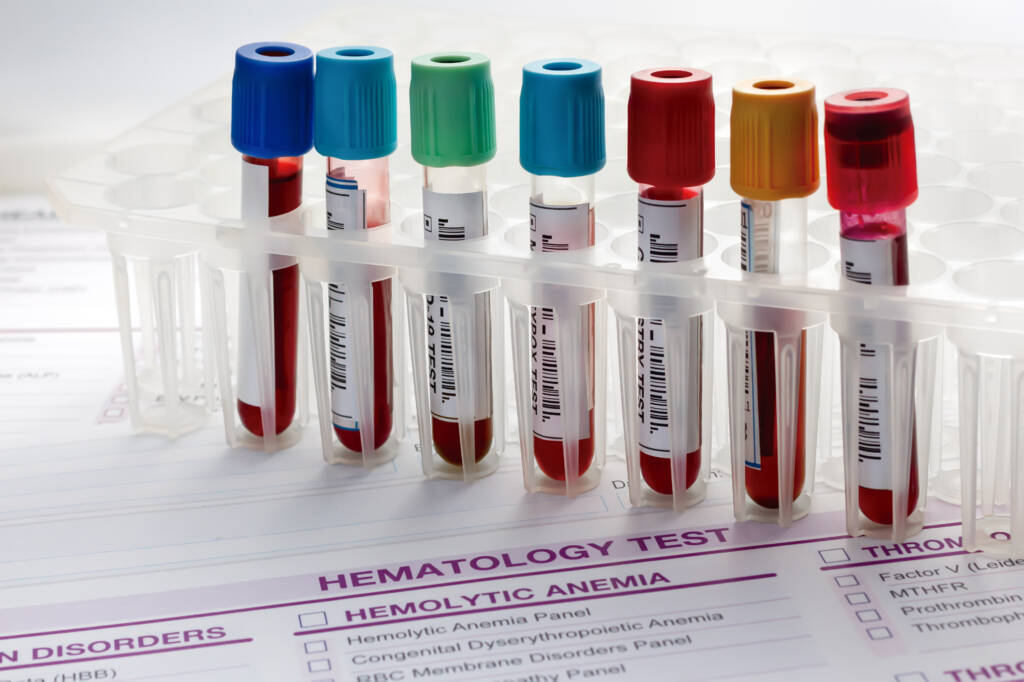
Collect 2 mL of serum. Allow the serum separator tube (SST) to clot in an upright position for at least 30 minutes, then centrifuge within 2 hours after collection. Keep refrigerated.
Container Type
Serum Separator tube
Alternate Specimen Requirements
Collect 2 mL of serum from a plain red-top tube. Allow the sample to clot upright for at least 60 minutes, then centrifuge and transfer the serum to a plastic transport tube within 2 hours. Clearly label the tube as serum from a plain red-top tube. Keep refrigerated.
Minimum Volume
- 0.5 mL Serum
Transport Temperature
Refrigerated
Expected Turnaround Time
1 Day
Specimen Stability
- 5 days at room temperature
- 1 week refrigerated
- 3 months frozen
Methodology
Roche COBAS homogeneous enzyme immunoassay (EIA).
Overview
Valproic acid (VAP) is an anticonvulsant used as both mono and adjunctive therapy primarily in the treatment of epilepsy. It is also prescribed for acute mania in bipolar disorder and as prophylaxis for migraine headaches.
To maintain a safe and effective therapeutic range, serial monitoring of VAP levels is recommended. While VAP toxicity often causes mild, reversible central nervous system depression, severe complications and fatalities can occur. Therefore, serum concentrations should be monitored when signs of toxicity appear.
This assay detects total valproic acid. At therapeutic levels, 80–90% of VAP is bound to plasma proteins — only the free fraction is biologically active. Conditions that reduce plasma protein binding (such as advanced age, hepatic or renal dysfunction) can increase free valproic acid levels and risk toxicity.
Certain medications (e.g., high-dose salicylates) can also displace VAP from albumin, increasing the free fraction and potential toxicity.
Patients may show symptoms of VAP toxicity even when total blood levels appear normal. In such cases, free valproic acid testing may help determine the cause. See Valproic Acid Level, Free and Total, Serum
Clinical Significance
Therapeutic drug monitoring helps assess:
- Poor clinical response
- Signs of toxicity
- Onset of seizures
- Changes in concurrent medications
- Possible noncompliance
Additional Information
Valproic acid toxicity may result from either acute overdose or chronic therapy (idiosyncratic response). Serum levels do not always reflect toxicity severity.
Common and early symptoms:
- Central nervous system depression (from mild drowsiness/confusion to coma)
- Metabolic issues: hyperammonemia, metabolic acidosis, hyperosmolality, hypernatremia, hypocalcemia
- Hepatotoxicity (acute or chronic)
- Gastrointestinal symptoms: nausea, vomiting, diarrhea
- Rarely, acute pancreatitis
Valproic acid is rapidly absorbed (though food may delay absorption without affecting overall levels). It is extensively metabolized in the liver via glucuronide conjugation and mitochondrial beta-oxidation, with excretion mainly in the urine (2–3% unchanged). The relationship between dose and total valproate concentration is nonlinear.
Drug Interactions
Valproic Acid levels/effects may be increased by:
Alizapride, Azelastine (Nasal), Brimonidine (Topical), Bromopride, Bromperidol, Chlormethiazole, Chlorphenesin Carbamate, ChlorproMAZINE, CloBAZam, Cosyntropin, Dimethindene (Topical), Doxylamine, Droperidol, Esketamine, Felbamate, GuanFACINE, HydrOXYzine, Kava Kava, Lemborexant, LevETIRAcetam, Lisuride, Lofexidine, Magnesium Sulfate, Methotrimeprazine, Metoclopramide, Minocycline (Systemic), Oxomemazine, Perampanel, Primidone, Salicylates, Topiramate, Trimeprazine.
Valproic Acid levels/effects may be decreased by:
Barbiturates, CarBAMazepine, Carbapenems, Cholestyramine Resin, Estrogen Derivatives (Contraceptive), Ethosuximide, Fosphenytoin-Phenytoin, Mefloquine, Methylfolate, Mianserin, Orlistat, Perampanel, Protease Inhibitors, RifAMPin.
References
Patel N, Donkor K. Acute valproic acid toxicity. UCLA Department of Medicine website. http://www.med.ucla.edu/modules/wfsection/article.php?articleid=511. Published July 2011. Updated January 4, 2012. Accessed September 9, 2014.
Rivers CM. Valproic acid poisoning. In: Post TW, ed. UpToDate. Waltham, MA: UpToDate; 2014. http://www.uptodate.com. Accessed September 9, 2014.
Stavzor (valproic acid delayed release capsules) [prescribing information]. Miami, FL: Noven Therapeutics LCC; August 2013.
Alias
- depakene (valproic acid)
- depakote
Test Setup Days
Monday through Friday PM shift
CPT
80164 LOINC: 4086-5
Reference Range
50.0-125.0 UG/ML
REFERENCE RANGE MAY VARY DEPENDING ON TESTING LOCATION’S
METHODOLOGY
| UNIT CODE | UNIT CODE NAME | ANALYTE | GENDER | AGE | REFERENCE RANGE | Units of Measure |
|---|---|---|---|---|---|---|
| 3094 | VALPRO | VALPRO | NOT SPECIFIED | ALL | 50.0–125.0 | UG/ML |
| 3094 | VALPRO | VALPRO | MALE | ALL | 50.0–125.0 | UG/ML |
| 3094 | VALPRO | VALPRO | FEMALE | ALL | 50.0–125.0 | UG/ML |